
TL;DR: Off-platform revenue - upsells and direct bookings - added roughly $2,300 to one listing over twelve months. Same property, same nightly rate, no second door. The revenue came from what guests were already willing to pay for. They just weren't being asked.
How to Add Off-Platform Revenue to Your Airbnb
Off-platform revenue - upsells and direct bookings - added roughly $2,300 to one listing over twelve months. Same property, same nightly rate, no second door.
By J. Massey June 27, 2026 · 7 min read
Disclosure: This post may contain affiliate links. If you purchase through our links, we may earn a commission at no extra cost to you. We only recommend tools and services J. Massey's team actually uses.
Learn more →
Table of Contents
Two Revenue Streams Beyond the Nightly Rate

Guest upsells: Early check-in ($25), late checkout ($25), mid-stay cleaning ($45), grocery stocking, local experiences, pet fees
Direct repeat bookings: Skip the platform fee structure (host pays ~3%, guest pays under 14.2%) - more to you, less cost to them
The pattern: ~$150/month from early/late times, ~$90/month from mid-stay cleaning, 2-3 direct rebooks per year
First move: Pick one upsell, price it, mention it in your pre-arrival message this week
Airbnb reported the typical US host earned about $14,000 in supplemental income in 2022. The ~$2,300 sits on top of that base. It's what happens when you treat the booking as the start of the relationship, not the finish line.
What Off-Platform Revenue Means and Why It Beats Raising Your Rate
Off-platform revenue is money earned from the guest beyond the nightly rate booked through the OTA. Two streams: guest upsells and repeat bookings that come direct.
A rate increase risks occupancy. You're gambling guests will still book at the higher price. An upsell adds revenue to a stay that's already confirmed. The guest said yes to the property. You're offering value on top of an existing transaction.
The hotel industry generates 20-30% of total revenue from ancillary services - hotel-industry benchmark, not a CFD number. STR operators run a version of the same model at smaller scale.
Fee drag: Airbnb's standard host service fee is about 3% under the split-fee model. Guests pay under 14.2% on top. Off-platform revenue and direct bookings skip that structure. More of each dollar reaches you.
Key point: Rate increases gamble with occupancy. Upsells add revenue to bookings already confirmed.
Where the $2,300 Came From: The Math
The anonymized math from the pattern:
Early check-in and late checkout: Offered to roughly 6 stays per month at $25 each. About $150 per month, $1,800 over the year. Not every guest takes it. The ones with schedule gaps do.
Mid-stay cleaning: Offered to longer stays. About 2 per month at $45 each. Roughly $90 per month, $1,080 annually. Guests staying five nights or more will pay for this if their stay crosses into a second week or they're traveling with kids.
Reality check: some of these overlap with the same stays. Not every guest says yes. The take rate on upsells is partial. You're not adding $150 and $90 and calling it $240 per month. Some months it's $180, some it's $220, some it's $100.
Repeat and direct bookings: Two to three guests per year rebook direct after their first stay. On a $150-per-night booking, skipping the ~3% host fee saves about $4.50 per night. The bigger gain is skipping the guest fee drag. The guest pays slightly less while you net more, or you split the savings. Both parties win compared to rebooking through the platform.
Net total across both streams: roughly $2,300 in one year from one listing.
The exact number varies by market, price point, property type, and how consistently you run the system. This is what the pattern produces when executed.
Key point: $1,800 from flexible timing, $1,080 from mid-stay cleaning, 2-3 direct rebooks per year - all from one existing listing.
What Guests Pay For: The Upsell Half
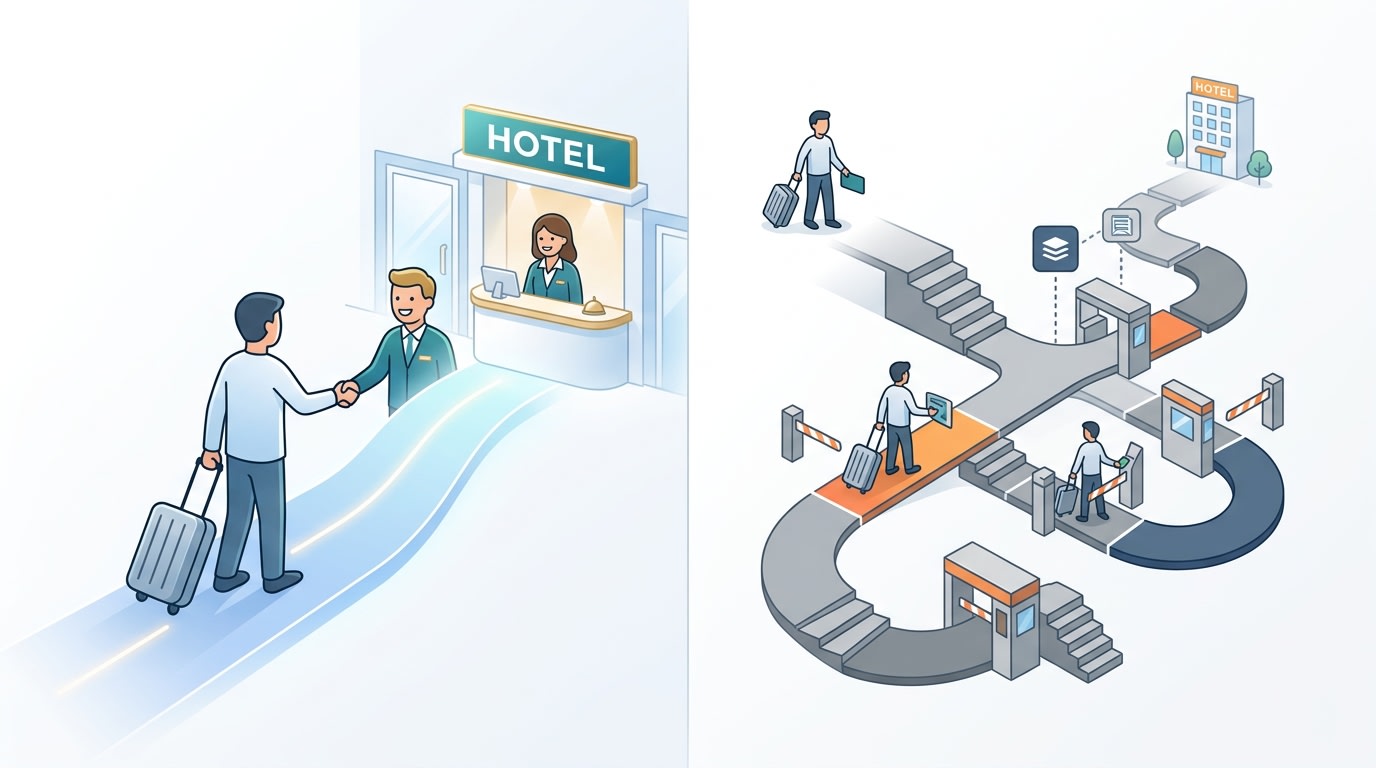
Start with add-ons that solve real guest problems:
Early check-in and late checkout. Guests with flights landing at 10am or leaving at 8pm will pay $25 to skip sitting in a coffee shop for four hours. You're solving a schedule gap. Low friction, immediate value, no extra inventory required.
Mid-stay cleaning. Stays of five nights or longer. Families with kids. Guests who want the space refreshed halfway through. Charge what your cleaner charges you, plus $10-15 for coordination. It's a service that keeps the property in better shape and the guest happier.
Grocery or fridge stocking. Guests pre-order what they want. You coordinate with a local service or handle it yourself. Charge cost plus a coordination fee. Guests with kids or dietary restrictions will pay for this.
Local experiences. Partner with a local guide, tour operator, or activity provider. Earn a referral fee when your guest books. You're not running the experience. You're connecting the guest to what they'd book anyway.
Pet fees. If you allow pets, charge for them. Guests expect it. The fee covers the extra cleaning and any wear the pet causes.
Pick one to start. Don't build a 15-item menu on day one. Offer early check-in or late checkout on your next three bookings and see what the take rate looks like. Add the second upsell after you've run the first one for 60 days.
Compliance note: Upsell income is taxable. Some add-on services - transportation, certain experience offerings - carry licensing or permit requirements depending on your market. Confirm with a tax professional and check your local rules before charging for services. Airbnb's 2025 price-transparency changes affect how add-on and concierge fees are presented to guests on the platform. Verify Airbnb's current policies before charging off-platform fees.
Key point: Start with one upsell. Run it for 60 days. Track the take rate before adding more.
Turning One Booking Into the Next: The Repeat Half

The booking is the start of the relationship.
The guest handed you money and trusted you with their trip. Most operators treat checkout as the finish line. The operators who capture repeat bookings treat it as the beginning of the next conversation.
How a guest becomes a repeat or referral booker:
Follow up after checkout. Send one message. "Thanks for staying. If you're back in [city], reach out directly." That's the whole script. No hard sell. No multi-paragraph thank-you note. One sentence that opens the door.
Make the stay memorable enough they want to return. This isn't about upselling during the stay. It's about running a property that works. Clean space, clear instructions, fast responses, no surprises. Guests remember properties that don't create friction.
Give them a reason to come back direct. A small discount on a direct rebook beats the platform fee drag for both of you. You net more. They pay less. The savings come from skipping the combined fee structure.
Why a direct repeat booking is worth more per dollar: it skips the OTA fee structure. Under Airbnb's split model, the host pays ~3% and the guest pays under 14.2%. On a $900 booking, that's $100+ in combined fees gone on a direct rebook. Some of that goes back to the guest as an incentive while you still net more than you would through the platform.
Retention economics: a 5% increase in customer retention can increase profits 25-95%. Acquiring a new customer costs roughly 5x more than retaining one. These are widely-cited rules of thumb. The principle applies to STR operators running real businesses.
Key point: One follow-up message after checkout. One sentence opens the door for the next booking.
First Move This Week
Pick one upsell, price it, mention it in your pre-arrival message. That's the whole system on day one.
The sequence:
1. Pick one upsell to offer on your next booking. Early check-in or late checkout is the easiest starting point. Low friction, immediate value for the guest, no extra inventory.
2. Set a price. Check what local hotels charge for the same flexibility. Price yours competitively. If hotels charge $50 for late checkout, you charge $25-35 and deliver value.
3. Mention it in your pre-arrival message. "If your schedule would work better with an early check-in or late checkout, let me know. I can sometimes accommodate that for a small fee." No hard pitch. You're offering, not selling.
4. After checkout, send one follow-up message. Thank them for staying. Tell them to reach out if they're back in town. One sentence.
5. Track what each guest spends beyond the nightly rate. Use a spreadsheet. Column for guest name, column for upsell type, column for dollar amount. After 90 days, you'll see the pattern. That's your baseline.
FAQ: How to Add Off-Platform Revenue to Your Airbnb
How can I make more money on Airbnb without raising my nightly rate?
Sell guest upsells on stays already booked and capture repeat and direct referral bookings. This adds revenue without risking the occupancy a price increase costs you. Early check-in, mid-stay cleaning, and a post-checkout follow-up message are the three starting moves.
What are the best Airbnb upsells?
Early check-in and late checkout, mid-stay cleaning, grocery or fridge stocking, local experiences, and pet fees are the most consistent performers. They work because they solve real guest problems - schedule gaps, long stays, arriving hungry.
How much extra money can Airbnb upsells make?
It varies by property, price point, and guest mix. A single existing listing adds four figures a year when the operator runs both upsells and repeat-booking capture consistently. Treat any figure as illustrative. The lever is consistency, not listing count.
Why are repeat and direct bookings worth more than new OTA bookings?
A direct repeat booking skips the platform's combined fee structure - $100 or more on a mid-range stay - so more of each dollar reaches you. Retaining an existing guest costs less than winning a new one.
Are Airbnb upsells taxable?
Upsell income is taxable, and some add-on services carry licensing or permit implications depending on your market. Confirm specifics with a tax professional and check Airbnb's current policies. The platform's 2025 price-transparency changes affect how add-on fees are presented.
Key Takeaways
Off-platform revenue - upsells and direct bookings - added $2,300 to one listing over twelve months without changing the nightly rate
Early check-in and late checkout solve schedule gaps. Charge $25. Offer to 6 stays per month for ~$1,800 annually
Mid-stay cleaning works on stays of five nights or longer. Charge cleaner cost plus $10-15. About 2 per month for ~$1,080 annually
Direct repeat bookings skip the platform fee structure (host ~3%, guest under 14.2%). More to you, less cost to them
First move: Pick one upsell, price it, mention it in your pre-arrival message this week
After checkout, send one follow-up message: "Thanks for staying - if you're back in [city], reach out directly"
Track upsell revenue in a spreadsheet. After 90 days, you'll see your pattern
Learn STR Operations the Right Way
Every operator I work with goes through this audit before we build the second channel, the second guest type, the second pricing model. If you want the full framework — the platforms, the compliance sequence, the pricing model that protects margins through regulatory shifts — that's what we map on a strategy call.
*Last updated: June 23, 2026.*
J. Massey is a short-term rental operator and the founder of CashFlowDiary. He has trained more than 10,000 entrepreneurs in STR operations and rental arbitrage, and reaches 19,000+ subscribers through the CFD newsletter. He runs active STR portfolios and publishes the systems he builds in real time. More at cashflowdiary.com/blog.
Keep reading
Disclaimer: Educational content only — not financial, legal, or tax advice; results vary.
See our full Earnings Disclaimer and Affiliate Disclosure for complete details. © 2026 West Egg Enterprises, Inc. All rights reserved.