How to Finance a Short-Term Rental: Loan Options, Down Payments, and the DSCR Path
Every page-1 result on this topic is a lender selling their product. This isn't that.
By J. MasseyJune 22, 2026
Share
Disclosure: This post may contain affiliate links. If you purchase through our links, we may earn a commission at no extra cost to you. We only recommend tools and services J. Massey's team actually uses.
Learn more →
TL;DR: Every search result on STR financing is written by a lender. We don't originate loans, so we're telling you what works for the deal, not what pays us commission. Four financing paths exist: conventional (6.0-7.0%, needs W-2 income), DSCR (6.75-8.25%, qualifies on property income), portfolio/bank-statement (6.5-9.0%, for unique properties), and bridge/hard money (9-15%, short-term only). Expect 20-25% down plus 6-12 months reserves. DSCR loans are the operator's path: no tax returns, no W-2s, property income covers the payment. Run the numbers before you shop lenders.
2026 Lending Landscape: Traditional mortgage rates have forced creative financing strategies into the mainstream. DSCR loans and seller financing are now the primary vehicles for acquiring new properties.
2026 Lending Landscape: Traditional mortgage rates have forced creative financing strategies into the mainstream. DSCR loans and seller financing are now the primary vehicles for acquiring new properties.
What you need to know:
I've spent 15+ years in this space, trained more than 10,000 operators through CashFlowDiary, and recorded 237+ podcast episodes breaking down the deals that work and the ones that don't. The pattern below shows up in every cycle.
Qualify the property first, then find the loan that fits the cash flow.
DSCR loans let you qualify on rental income, not personal income (no tax returns or W-2s required).
Expect 20-25% down payment plus $16,000-$32,000 in reserves sitting in your account after closing.
Conventional loans ignore or heavily discount STR income. DSCR lenders count 75% of projected income.
Financing an STR as a "second home" to get better rates is occupancy fraud. Finance it as investment property.
We run STR operations and consult operators building portfolios. We don't sell loans. The position lets us tell you what fits your deal instead of what fits a commission structure.
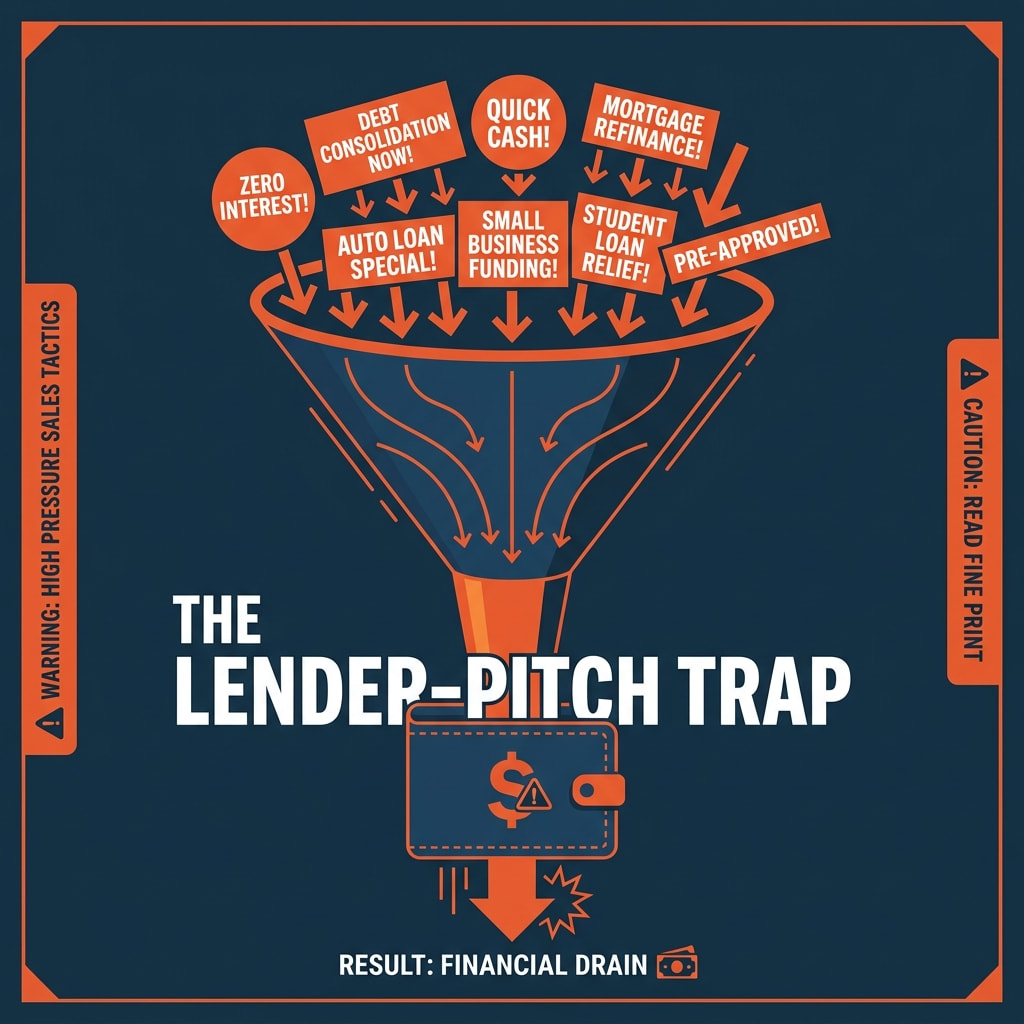
Qualify the property before you shop lenders. Operators who do it backward call a lender first, get pre-approved for a dollar amount, then hunt for a property inside the budget. The approach destroys liquidity and locks you into deals with financing terms the property can't support.
Two questions decide whether a property works: "How do I finance it?" and "How do I manage it?" If the property fails either test, walk. This article covers financing with real numbers, operator-level tradeoffs, and the structures we've deployed across 300+ client properties.
Why You Qualify the Property Before You Shop Loans
Does the deal cash-flow at the financing terms you're going to get? Run the numbers before you call a lender.
Use the STR Investment Calculator and Airbnb Income Calculator to model income before you talk to any lender. Input conservative occupancy, realistic cleaning costs, platform fees, and the mortgage payment at current rates. If the property doesn't produce positive cash flow after operating expenses and debt service, you have a monthly liability, not a property.
The financing choice follows the deal. You find a property, model the economics, then choose the loan structure that protects cash flow.
Operators destroy liquidity by buying property before understanding the financing structure. They put 25% down and close. Then they realize they need $15,000 in reserves, $8,000 in furniture, and $3,000 to cover two months of negative cash flow while bookings ramp. The capital is gone. The property bleeds. The operator is stuck.
Key Point: Sequence determines outcome. Finance follows property qualification, not the reverse. If lack of capital ($80,000+) blocks the deal, rental arbitrage offers a low-capital path ($5,000-$15,000). Compare at Arbitrage vs Buy Calculator.
What Are Your Real Loan Options for STR Financing?
Four short-term rental loan types compared: conventional, DSCR, portfolio and bridge with down payments
Four financing structures. Honest tradeoffs, not a lender pitch.
Conventional Mortgage: Best Rates, Hardest Qualification
Who it fits: W-2 income earners buying their first property or planning part-time occupancy.
Conventional underwriting ignores projected STR income or discounts it heavily. A property generating $6,200/month STR income gets underwritten at $2,400/month because appraisers pull long-term rental comps. The compression kills deals. You know the property cash-flows at $6,200. The lender qualifies you at $2,400. Approval denied.
Fannie Mae requires minimum 15% down (85% loan-to-value). STR deals need 20-25% because lenders add overlays for vacation rentals and high-tourism markets.
Rates run 6.0-7.0% (2025-2026), which is 0.5-1.5% lower than DSCR. But qualification barriers are real. A lender underwrites using your personal income, not property income. STR revenue doesn't count unless you document 12-24 months of rental history on tax returns. First-time STR operators don't have that.
Key Point: Conventional loans offer the best rates but worst qualification path for STR income. First-time operators without W-2 income documentation get rejected.
DSCR Loan: The Operator's Financing Path
Who it fits: Portfolio builders, self-employed operators, anyone whose tax returns don't show cash flow.
DSCR loans qualify on property income, not personal income. No W-2s. No tax returns. No debt-to-income calculation. Lenders ask one question: does rental income cover the mortgage payment?
Rates: 6.75-8.25% (2025-2026). Rate premium costs $150-$250/month on a $300,000 loan vs conventional. But qualification flexibility and closing speed (21-30 days vs 45-60) produce better returns because you close deals other operators can't qualify for.
No 10-property cap. Conventional loans stop at 10 financed properties. DSCR scales. Building past property four? DSCR becomes default.
Key Point: Higher rates, faster deals. For operators outside the W-2 model, DSCR isn't backup. It's primary financing.
Portfolio and Bank-Statement Loans: For Unique Properties
Portfolio lenders hold loans on their books and write their own rules. No Fannie Mae boxes. Good for non-warrantable condos, rural properties, unique structures.
Bank-statement programs use 12-24 months of deposits to calculate income. Business nets $180,000 but Schedule C shows $65,000 after write-offs? Bank-statement lender qualifies you on deposit history.
Key Point: Rates: 6.5-9.0%. Negotiated terms. No published rate sheets. You're underwriting the relationship.
Bridge and Hard Money: Short-Term Only
Short-term financing (6-24 months). Asset-based. Fast closing (7-14 days). Rates: 9-15% plus 2-5 points.
Use case: acquire and renovate distressed property, stabilize cash flow, refinance into permanent DSCR or conventional. Buy at $280,000, renovate for $40,000, stabilize at $380,000, refinance into DSCR at 75% LTV ($285,000), pull capital out.
How DSCR Loans Work: The Math Behind the Qualification
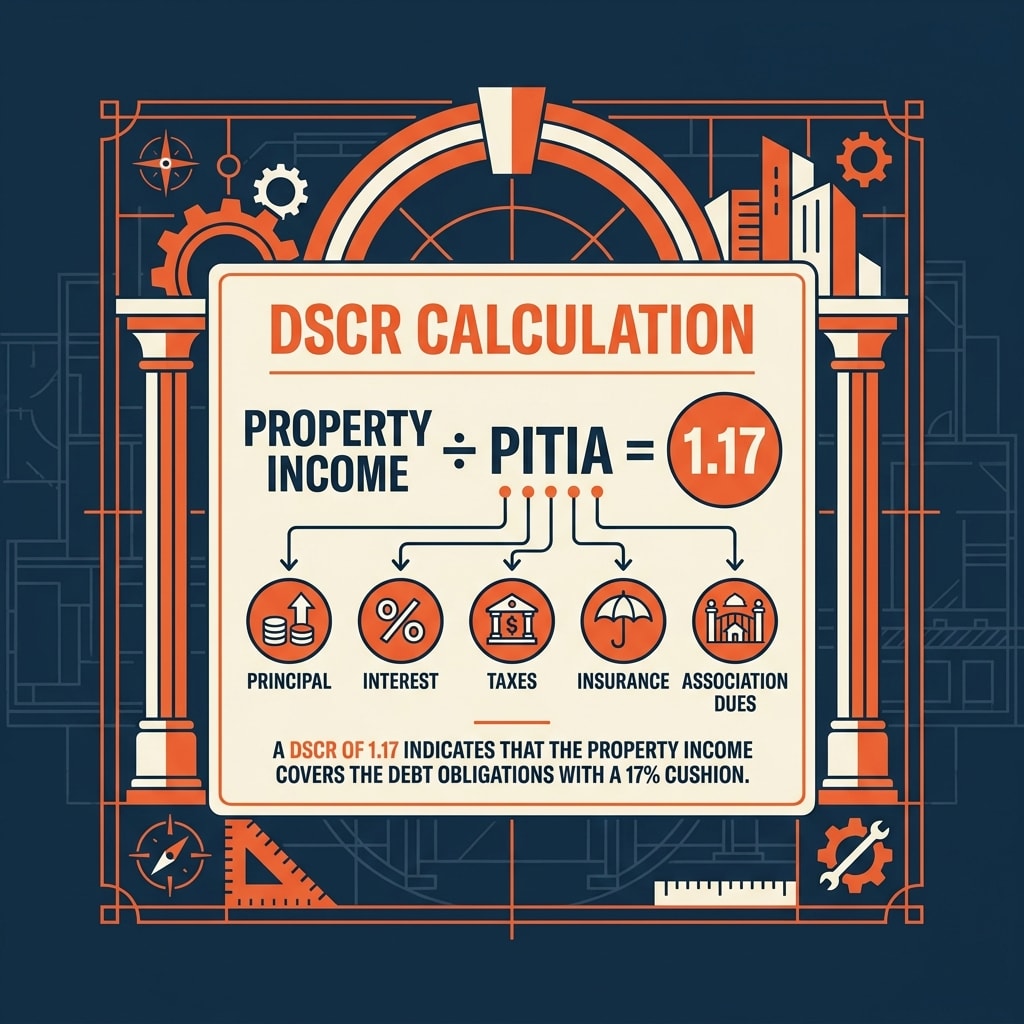
DSCR stands for Debt Service Coverage Ratio. In plain English: DSCR = property income ÷ PITIA.
PITIA = the full monthly cost of holding the loan. Principal, interest, taxes, insurance, association dues. Everything the property has to pay every month to stay current.
A DSCR of 1.0 means the property's income exactly covers its own payment. Below 1.0 means you're subsidizing the mortgage from your own pocket every month. Above 1.0 means the property produces positive cash flow after debt service.
Most STR DSCR programs require a minimum DSCR around 1.0. Some lenders require 1.10 or 1.25, especially for vacation rentals in seasonal markets. Better pricing kicks in above 1.25-1.35.
Here's the worked example using real STR numbers:
Property purchase price: $400,000 Down payment: 25% = $100,000 Loan amount: $300,000 at 7.5% / 30-year fixed = $2,098/month principal and interest Property taxes: $350/month Insurance: $180/month HOA dues: $70/month PITIA: $2,698/month
Projected gross STR income (conservative): $4,500/month Operating expenses (cleaning, platform fees, supplies, management): $1,350/month (30% of gross) Net operating income: $3,150/month
DSCR = $3,150 ÷ $2,698 = 1.17
That qualifies. The property covers its own payment with $452/month left over before you account for capital expenditures, vacancy, or maintenance reserves.
Credit score matters. Most programs require minimum FICO around 640-660 to get approved. Lenders want 700+ when qualifying on short-term rental income because STR cash flow is more volatile than long-term rental income. Best pricing shows up above 720-740. As of 2025-2026, these thresholds vary by lender, but the pattern holds: higher credit scores open better rates and lower DSCR requirements.
Key Point: One lender might approve 1.0 DSCR at 660 FICO. Another requires 1.15 DSCR at same score. Shop three lenders minimum before you lock.
Down Payment and Reserve Requirements: The Hidden Capital Stack
The lender-pitch trap: a funnel of loan ads pointing at a buyer's wallet
Fannie Mae Eligibility Matrix sets the floor: investment property = 15% down (85% LTV). Second home = 10% down (90% LTV).
Real-world STR and DSCR reality: 20-25% down is the standard. 25% is common for vacation rentals, properties in resort markets, or any deal where the lender views the income stream as higher risk. Some programs require 30%+ for lower credit profiles (below 680 FICO) or properties in markets with high STR saturation.
Don't forget reserves. Lenders typically require 6-12 months of PITIA in liquid reserves AFTER closing. On a $2,700/month PITIA, that's $16,200-$32,400 sitting in verified accounts after you close. Reserves can include checking accounts, savings accounts, money market accounts, certificates of deposit, and liquid investment accounts. Some lenders will count retirement accounts but discount them 30-40% because of early withdrawal penalties.
Seasoning matters. Funds need to be in your account 60-90 days before closing. A recent transfer or a gift from a family member creates documentation friction. Lenders want to see the money has been yours, in your name, for at least two months. If you're moving money around to consolidate reserves, do it early.
The math most investors miss: down payment + closing costs + reserves. Model all three before you make an offer.
Example on a $400,000 purchase: Down payment (25%): $100,000 Closing costs (3-4%): $12,000-$16,000 Reserves (8 months PITIA at $2,700/month): $21,600 Total capital required: $133,600-$137,600
That's before furniture, before the first month's operating expenses, before anything breaks. If you're sitting on $140,000 in liquid capital and you think you can buy a $400,000 property, the numbers say you can't. You'll close the deal and have $2,400 left. One HVAC failure and you're insolvent.
Key Point: Down payment plus closing costs plus reserves equals total capital required. On a $400,000 purchase, you need $133,600-$137,600 before furniture or operating expenses. Model the full stack before you make the offer.
Can You Use Projected STR Income to Qualify?
Yes, through DSCR and non-QM programs. Not through standard conventional financing.
For purchases where the property has no booking history, lenders typically count 75% of projected gross STR income, supported by an appraisal Form 1007 (a market rent survey that includes short-term rental comparable data) or a property-manager projection letter. Some lenders use third-party data from platforms like AirDNA to verify the income estimate.
For refinances, lenders typically want trailing 12-month actual booking history. They'll pull your Airbnb or Vrbo earnings report and use the documented income to calculate DSCR. No projection. Actual performance.
Under standard Fannie Mae conventional guidelines, short-term and transient rental income is treated restrictively. Fannie Mae's rental income policy (B3-3.8-01) requires documented lease agreements and doesn't recognize projected STR income the same way a DSCR lender does. The path to qualifying on STR income runs through DSCR and non-QM lenders, not standard conventional underwriting.
Key Point: Model month-by-month, not peak-season extrapolated. A property with 1.25 DSCR annually might dip to 0.6 DSCR in off-peak months. Reserves cover the gap. Lenders know seasonal markets and price accordingly.
DSCR math: property income divided by PITIA equals a 1.17 ratio
This is the trap no lender leads with.
Fannie Mae Selling Guide B2-1.1-01 is direct: a second home "must not be rental property." A second home loan requires the owner to occupy the property for some portion of the year and carries a restriction on how frequently it can be rented. The exact restriction varies by lender, but the principle holds: if you're operating the property full-time as an Airbnb or Vrbo, it's not a second home. It's an investment property by definition.
Why this matters: second home loans carry better loan-to-value ratios (90% LTV vs 85% for investment properties) and lower interest rates. The rate difference can be 0.25-0.75%, which is why some investors are tempted to mislabel the occupancy. They tell the lender it's a second home, get the better terms, then list it on Airbnb the day after closing.
That's occupancy misrepresentation. Mortgage fraud. Lenders and loan servicers monitor rental platforms. They cross-reference addresses. If your "second home" shows 200 nights booked on Airbnb, the servicer can call the loan due immediately or report the fraud. The risk isn't theoretical. It happens.
The investment property designation also carries a Loan-Level Price Adjustment (LLPA), a pricing hit that raises your effective interest rate by 0.5-1.5% compared to a primary residence or second home. That's the real cost of running an STR vs holding a second home. The pricing is higher. The structure is honest.
Key Point: Operate it as full-time STR, finance it as investment property. Occupancy fraud carries loan-due penalties and fraud reporting. Rate savings aren't worth the legal risk.
Frequently Asked Questions
What credit score do I need for a DSCR loan on an Airbnb?
Most STR DSCR programs require a minimum FICO around 640-660, but lenders typically want 700+ when qualifying on short-term rental income, with the best pricing above 720-740. As of 2025-2026, varies by lender.
How much down payment do I need for a short-term rental?
The conventional investment-property minimum is 15% down per Fannie Mae guidelines. In practice, STR and DSCR loans usually require 20-25% down. 25% is common for vacation rentals. As of 2025-2026.
How is DSCR calculated for a short-term rental?
DSCR = property income ÷ PITIA (principal, interest, taxes, insurance, association dues). A ratio of 1.0 means rental income exactly covers the payment. Most STR programs require a minimum DSCR around 1.0, with some requiring 1.10-1.25.
Can I finance an Airbnb as a second home to get better terms?
Generally no. Fannie Mae says a second home "must not be rental property." Operating it as a full-time STR makes it an investment property. Claiming otherwise is occupancy misrepresentation.
Can I use projected Airbnb income to qualify with no booking history?
Yes, under DSCR programs. For purchases, lenders typically count 75% of projected gross STR income, supported by an appraisal Form 1007 or a property-manager projection. Refinances use trailing 12-month actual booking history.
Do DSCR loans require tax returns?
No. DSCR loans qualify on the property's cash flow, not your personal income. No W-2s, tax returns, or debt-to-income calculation. You qualify if the property's income covers the mortgage payment.
What's the difference between DSCR and conventional loan approval?
Conventional loans qualify you based on personal income (W-2s and tax returns). DSCR loans qualify based on property income. Your personal income doesn't matter if the property cash-flows.
How long does DSCR loan approval take?
DSCR loans close in 21-30 days. Conventional loans take 45-60 days because of personal income verification requirements.
What's the minimum DSCR ratio lenders will accept?
Most programs require 1.0 minimum (income equals payment). Some require 1.10-1.25 for STRs in seasonal markets. Best pricing: 1.25-1.35 or higher.
Do I need an LLC to get a DSCR loan?
No. DSCR loans close in personal name or LLC. Some operators prefer LLC for liability protection, but it's not required for qualification.
Can I finance multiple STR properties with DSCR loans?
Yes. DSCR loans don't have Fannie Mae's 10-property cap. You can finance as many properties as the portfolio cash flow supports.
Key Takeaways: STR Financing Done Right
Qualify the property before you shop lenders. Model cash flow at realistic financing terms using the STR Investment Calculator.
DSCR loans are the operator's financing path: no tax returns, no W-2s, property income qualifies. Rates run 6.75-8.25% with 20-25% down.
Conventional loans offer best rates (6.0-7.0%) but worst qualification for STR income. First-time operators without rental history get rejected.
Expect 20-25% down payment plus 6-12 months reserves ($16,000-$32,000) sitting in accounts after closing. Total capital required on a $400,000 property: $133,600-$137,600.
DSCR lenders count 75% of projected STR income for purchases with no booking history. Refinances require 12-month trailing income documentation.
Financing an STR as a "second home" to get better rates is occupancy fraud. Lenders monitor platforms and cross-reference addresses.
Shop three DSCR lenders minimum. DSCR requirements and pricing vary widely (1.0 vs 1.15 at same credit score).
Run the Numbers First
Financing follows the deal. Not the other way around.
Use the STR Investment Calculator to test whether the financed deal actually cash-flows before you call a lender. Model conservative occupancy, realistic expenses, and the mortgage payment at current rates. If the property doesn't produce positive cash flow after debt service, you don't have a property.
Subscribe to the weekly newsletter for operator-level updates on financing, market shifts, and systems that work in production: CashFlowDiary Newsletter.
Financing a specific property? Book a free diagnostic call and we'll map the right loan structure to the deal: Free Diagnostic Call.
This article is educational only and does not constitute financial, lending, tax, or legal advice. All rates and terms cited are as of 2025-2026 and vary by lender. Consult a licensed mortgage professional and financial advisor before making financing decisions.