Is Airbnb Profitable? Why a Draw Month Can Still Be a Win
Yes, Airbnb is still profitable for well-run units in 2026. But most operators score the wrong game. A break-even month with systems intact isn't a loss — it's a draw, and that's the first win.
By J. MasseyJune 24, 2026· 10 min read
Share
Disclosure: This post may contain affiliate links. If you purchase through our links, we may earn a commission at no extra cost to you. We only recommend tools and services J. Massey's team actually uses.
Learn more →
TL;DR: Yes. Airbnb is still profitable for well-run units in 2026. But most operators score the wrong game. A flat month where you hit break-even with systems intact isn't a loss. It's a draw. The business survived. That's the first win. The second win is knowing the difference between a draw and a warning before reserves start bleeding.
Cabo Verde qualified for the 2026 World Cup. Their first ever. A draw against a stronger opponent felt like a loss to fans who expected a blowout, but in context it was exactly the result they needed to advance.
I've spent 15+ years in this space, trained more than 10,000 operators through CashFlowDiary, and recorded 237+ podcast episodes breaking down the deals that work and the ones that don't. The pattern below shows up in every cycle.
Quick Answer:
Airbnb posted $12.2B in revenue in 2025, up 10% year-over-year. The platform is healthy.
Average US host earns around $14K to $15.8K gross annually, but that number is noise for your unit.
Your break-even nightly rate is total monthly costs divided by booked nights. That's the only scoreboard that tells you if a month is a draw or a warning.
Good occupancy is 55% to 60%, not 100%. Selling out at the wrong price destroys margin.
Healthy net margins run 25% to 40% after expenses. Below 20% is fragile.
That's how most operators read a flat month. They compare it to a fantasy sellout, not to the math that keeps the unit alive. A break-even month with systems intact and reserves untouched isn't a loss. It's a draw. The business survived. That matters more than most operators think.
The question "is Airbnb profitable" misses the real question: is your unit profitable, and how do you know when a month is a win versus a warning?
Interactive · run your own numbers
When does an arbitrage unit pay you back?
$2,200
$180
70%
$10,000
Monthly profit
$1,330
after lease + ~25% opex
Months to recoup setup
7.5
then it's pure cash flow
First profit lands in
Month 2
Compare that to 18+ months for new-build ownership.
The platform posted $12.2 billion in revenue in 2025, growing 10% year-over-year. RevPAR grew 8.1% year-over-year in early 2025. Q1 2026 guidance projects 14% to 16% acceleration. The platform is healthy.
The average US host earns around $14,000 per year in gross supplemental income according to AirDNA's 2024 analysis. That's before expenses. iGMS 2026 stats show the average US host earns $15,800 annually, with Superhosts earning 29% more.
Supply has grown. There are now 8 million active listings and 5 million hosts globally. The edge goes to operators who run real systems.
Key Point: The platform is healthy. Your unit is its own question.
Why Average Airbnb Income Is the Wrong Number to Chase
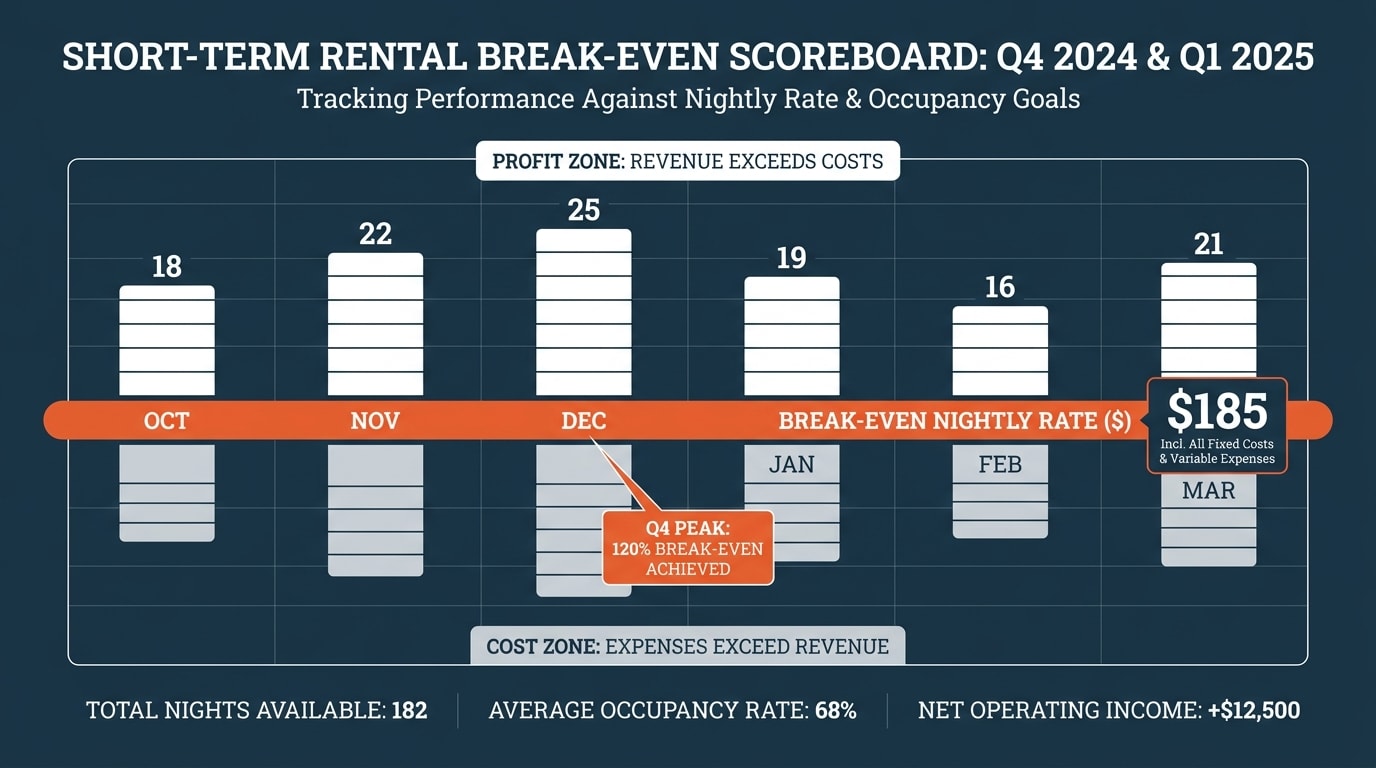
Break-even nightly rate scoreboard — booked nights above and below the break-even line
The $14,000 average is noise for any specific unit. It blends studios available 30 days a year with vacation homes running year-round.
AirROI data shows earnings range from $14,000 to $100,000 depending on market, property type, and management quality. The median in Maui is $47,900. The median in Austin is $21,300. Same platform, wildly different results.
The comparison trap works like this: operators compare their unit to a stranger's hero number or to a fantasy sellout month. They're measuring against the wrong scoreboard.
The first thing I do with a unit isn't check the revenue. I check whether it cleared break-even. Those are two different questions.
Key Point: Stop comparing your unit to a stranger's $14K screenshot. Compare it to the only number that shuts you down: your own break-even.
The Only Scoreboard That Matters: Your Break-Even
Break-even nightly rate equals total monthly costs divided by booked nights.
This is the number that tells you whether a month is a draw or a warning. Here's how to calculate it:
Step 1: Add up all monthly costs. Rent or mortgage, utilities, cleaning, platform fees, insurance, supplies, any PMS or software fees. Everything.
Step 2: Decide your target booked nights for the month. Not a fantasy. A realistic number based on your market and season.
Step 3: Divide total costs by target booked nights.
Step 4: That number is your break-even nightly rate. The floor below which the unit bleeds.
Example: If costs are $1,800 per month and you book 22 nights, break-even is $82 per night. Every dollar above $82 is profit. Every night you don't book at $82 or more is a cost, not a missed opportunity.
*[Image A: Break-even nightly rate formula: total monthly costs of $1,800 divided by 22 booked nights equals an $82 per-night break-even.]*
For arbitrage operators, margins are thinner because you're paying rent instead of a mortgage. The break-even discipline matters even more. You need to know your floor before you sign a lease.
By starting with arbitrage first, you figure out how to make a property make money before you take on the full expense of ownership.
The comparison trap — chasing a stranger's inflated income number instead of your own break-even
US average occupancy is around 50% according to AirROI. 55% is a solid baseline. Above 60% puts you in the top quartile.
iGMS 2026 data shows top occupancy cities: Honolulu 65%, Miami 62%, LA 62%, Seattle 55%, Nashville 50%.
AirROI property-type occupancy bands break down like this:
Studios: 48-58%
1BR: 46-58%
2BR: 42-56%
3BR+: 38-52%
Larger units book less frequently but at higher average daily rates. RevPAR is the number that reconciles them.
Why 100% occupancy is not the goal: if you're selling out every night, you're probably underpriced. Chasing 90% through underpricing destroys margin.
RevPAR equals ADR times occupancy rate. A $300 ADR at 40% occupancy gives you a RevPAR of $120. A $200 ADR at 70% occupancy gives you a RevPAR of $140. The second unit wins.
Fear of vacancy shouldn't stop you from making correct business decisions.
Key Point: A sold-out month at the wrong price is a busy month with a thin margin.
Reading a Flat Month: When a Draw Is a Win, and When It's a Warning
The decision rule has two outcomes:
DRAW (fine): Break-even met. Reserves untouched. Systems running clean. Guest reviews holding. This month didn't grow the unit, but it didn't damage it either. The business is alive.
WARNING (act): Unit bleeding cash. Break-even missed by more than one bad week. Systems breaking down. Comms slipping, reviews dropping, cleaning crew issues. Reserves being drawn down. This isn't a draw. This is a signal.
Healthy net margins run around 25% to 40% of gross revenue after all expenses. Below 20% is fragile. One bad month wipes it out. Operating expenses typically consume 25% to 45% of gross revenue.
A break-even month with your systems running clean tells you the business is alive. A sellout month feels great and tells you almost nothing about whether the systems are working or the unit is positioned correctly.
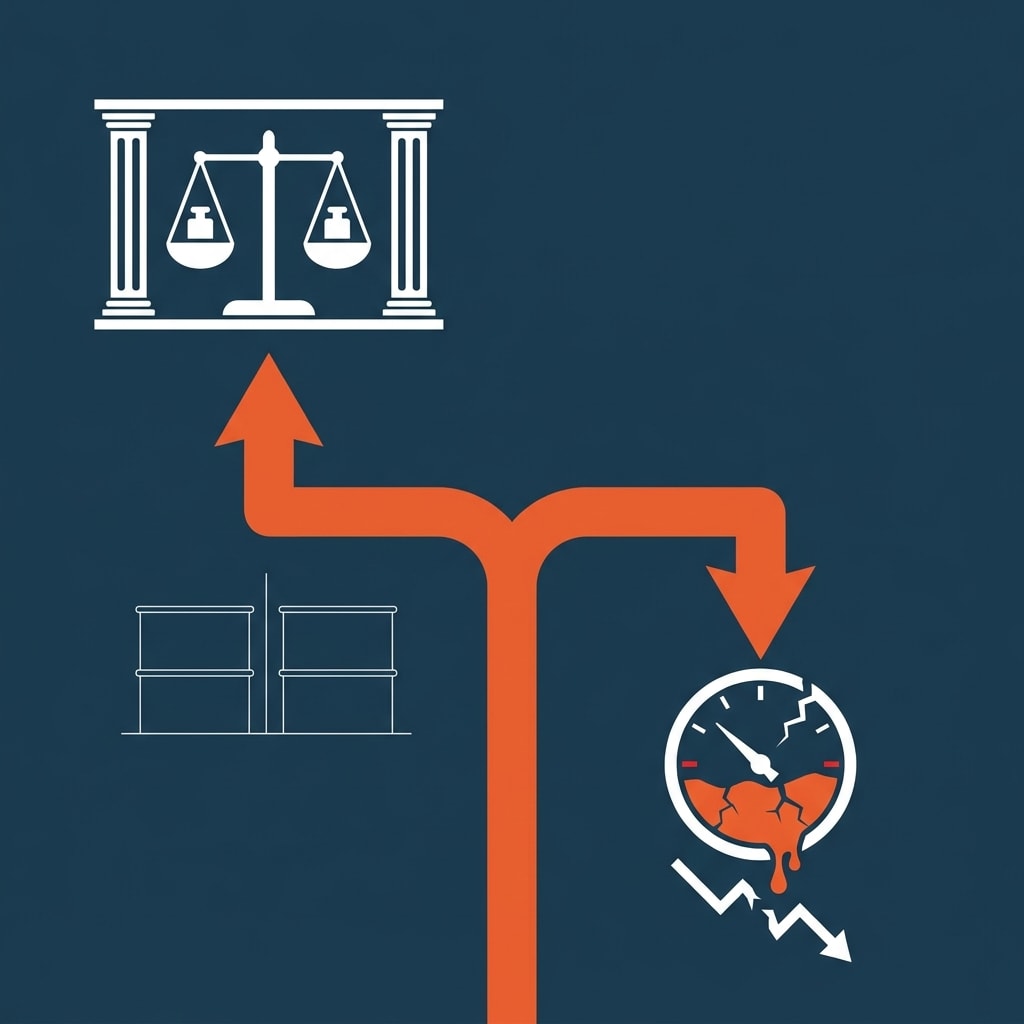
*[Image B: Decision flowchart: if break-even is met and reserves are untouched, the month is a draw; if the unit is bleeding cash with broken systems, it is a warning to act.]*
The draw-vs-warning decision: systems intact and reserves untouched versus a unit bleeding cash
Cabo Verde qualified for the 2026 World Cup. Their first ever. Markets near World Cup venues may see demand spikes. But one big month doesn't define a unit, the same way one big result doesn't define a team's season.
The lesson: a spike month is a bonus, not the baseline. Judge the unit on whether it clears break-even in the ordinary months.
Key Point: Spike months are bonuses. The baseline is whether you clear break-even in ordinary months.
Frequently Asked Questions
Is Airbnb still profitable and how do I know if my unit is winning?
Yes, for well-run units. The only way to know if your unit is winning is to compare revenue against your own break-even nightly rate. Total monthly costs divided by booked nights. That number tells you whether a month is a draw or a warning.
Is Airbnb profitable in 2026?
Yes, for well-positioned, well-run units. The average US host earns around $14,000 per year in gross supplemental income according to AirDNA 2024 data, but profitability depends on your own break-even, occupancy, and margin, not the national average.
What is the break-even nightly rate for an Airbnb?
Total monthly costs divided by booked nights. If costs are $1,800 per month and you book 22 nights, you need at least $82 per night to cover costs. Anything above that is profit.
What is a good occupancy rate for an Airbnb?
Most US markets average around 50%. 55% is a solid baseline. Above 60% puts you in the top quartile. Chasing 90% often means underpricing, which destroys margin.
What profit margin should an Airbnb make?
Healthy net margins run around 25% to 40% of gross revenue after all expenses. Below 20% is fragile. One bad month wipes it out. Operating expenses typically consume 25% to 45% of gross.
Is Airbnb arbitrage still profitable?
It's possible, but margins are thinner because you're paying rent instead of a mortgage. The break-even discipline matters even more. You need to know your floor before you sign a lease.
How do I know if my flat month was a draw or a warning?
If you hit break-even, kept reserves untouched, and systems ran clean with stable reviews, it's a draw. The business survived. If you missed break-even by more than a bad week, reserves got tapped, or systems broke down (comms slipping, reviews dropping, crew issues), it's a warning.
What is RevPAR and why does it matter?
RevPAR stands for Revenue Per Available Room. It equals ADR (average daily rate) times occupancy rate. RevPAR reconciles the tradeoff between pricing and occupancy. A $300 ADR at 40% occupancy gives you $120 RevPAR. A $200 ADR at 70% occupancy gives you $140 RevPAR. The second unit wins.
Airbnb is profitable in 2026 for well-run units, but your unit is its own question. The platform is healthy. Your systems and break-even determine whether you win.
Break-even nightly rate is the only scoreboard that matters. Total monthly costs divided by booked nights. Know this number before you price, before you book, before you sign anything.
Average Airbnb income ($14K to $15.8K annually) is noise. It blends part-time studios with year-round vacation homes. Don't compare your unit to a stranger's hero number.
Good occupancy is 55% to 60%, not 100%. Selling out at the wrong price destroys margin. RevPAR reconciles pricing and occupancy into the number that tells you if you're winning.
A draw month is a win if you hit break-even, kept reserves intact, and systems ran clean. A warning month is when you miss break-even, tap reserves, or systems break down.
Healthy net margins run 25% to 40% after expenses. Below 20% is fragile. One bad month wipes it out.
Spike months (like World Cup demand) are bonuses, not baselines. Judge your unit on whether it clears break-even in ordinary months.
Author: J. Massey — Active STR operator and educator. Founder of CashFlow Diary. Has trained 10,000+ entrepreneurs to build and run short-term rental businesses on real systems and real math.
*Disclaimer:* *This article is educational and not financial, tax, or investment advice. Airbnb income, expenses, margins, and occupancy vary by market, property, and management; figures cited are industry averages, not predictions for your unit. Consult a qualified financial or tax professional before making investment decisions.*