
Quick Read: The 2026 World Cup isn't creating opportunities for STR operators. It's exposing who built systems and who's winging it. The difference shows up in three places: pricing discipline, automated operations, and compliance. Operators who filled their calendars in March are printing cash. Operators who set pride-based rates in May are watching empty dates bleed revenue.
What the 2026 World Cup Is Teaching STR Operators Right Now
The 2026 World Cup isn't creating opportunities for STR operators — it's exposing who built systems and who's winging it. The difference shows up in pricing discipline, automated operations, and compliance.
By J. Massey June 24, 2026 · 9 min read
Disclosure: This post may contain affiliate links. If you purchase through our links, we may earn a commission at no extra cost to you. We only recommend tools and services J. Massey's team actually uses.
Learn more →
Table of Contents
What You Need to Know

Megaevents expose operational gaps, they don't create new operators
Pricing works when you fill the compression window, not when you chase vanity rates
Guest systems break under surge volume unless you automate before the event
Compliance violations spike when enforcement follows attention
The real skill: building for the calendar, not scrambling for the cup
Megaevents Don't Create Operators. They Expose Them.
The 2026 World Cup runs June 11 through July 19. Eleven US host cities. Every STR operator in those markets is getting a real-time stress test right now.
I've spent 15+ years in this space, trained more than 10,000 operators through CashFlowDiary, and recorded 237+ podcast episodes breaking down the deals that work and the ones that don't. The pattern below shows up in every cycle.
The test isn't filling a calendar during a megaevent. That's table stakes. The test is whether your pricing discipline, guest systems, and compliance posture hold up under compression without you manually running every piece.
Megaevents don't create opportunity. They reveal who built a business and who built a listing.
The hype crowd and the disciplined operator are running the same event window. The outcomes are splitting hard. The gap has never been more visible.
Why This Matters: If your systems break under World Cup volume, they'll break under F1, the Super Bowl, and every other surge period. The event is the diagnostic. The question is whether you're reading the data.
Where the Hype Crowd Is Bleeding Revenue
I've watched this pattern across Super Bowls, F1 races, and now the World Cup. The mistakes are consistent.
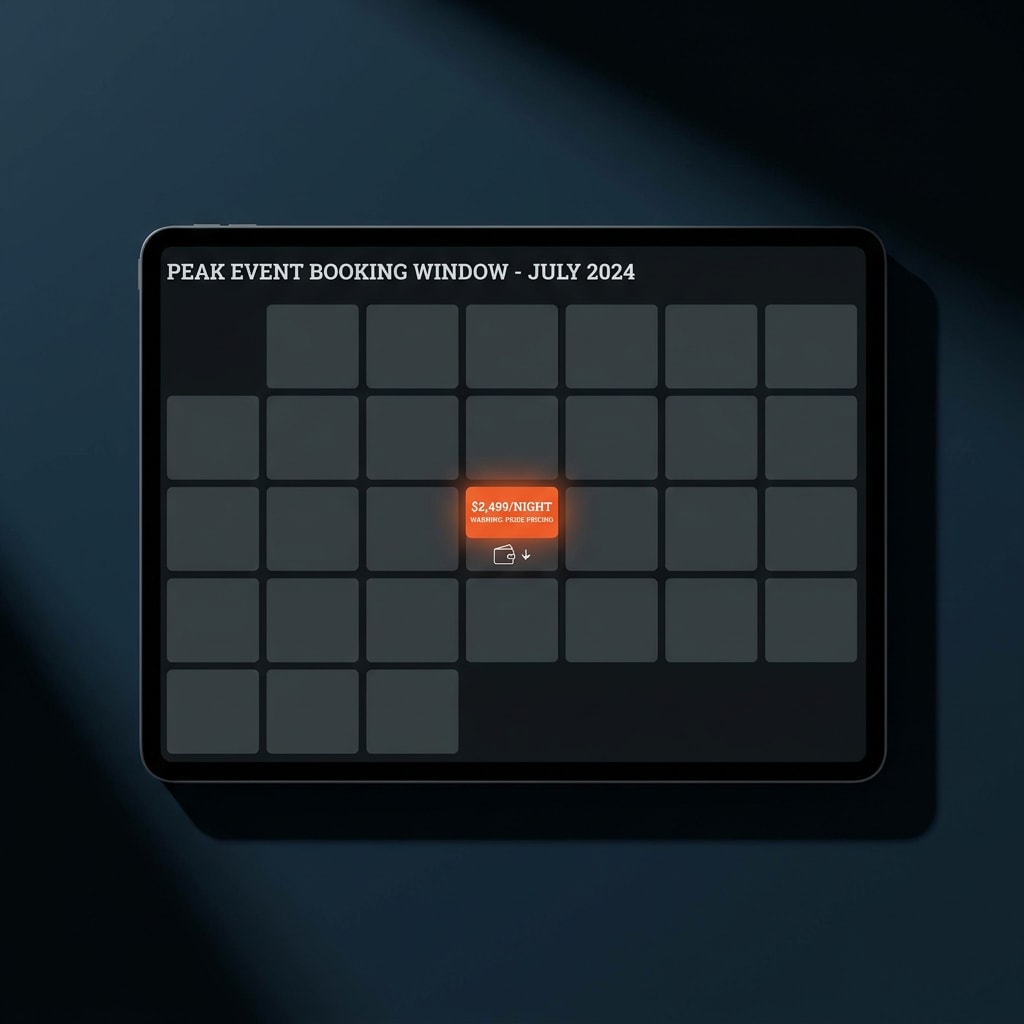
Operators saw the FIFA hotel block cancellation and priced with pride instead of math. Rates set at 3x to 5x base. No comp analysis. No demand curve. No minimum-stay logic.
Calendars sitting empty through the compression window because they priced themselves out of early bookers. Here's what the hype crowd missed: travelers planning international trips for a World Cup don't book in June. They booked in February, March, April. Operators who set $1,200/night rates in May are watching those dates sit empty while operators who priced at $650/night filled months ago.
Operators who skipped local compliance because "everyone's doing it." The bet was that enforcement would stay light during the event. Some markets proved that wrong. Properties pulled offline. Fines issued. Guest relocations at operator expense.
Operators who never built guest communication systems are now manually handling every inquiry during surge volume. The volume didn't create the problem. The volume exposed it. When you're running two properties and every guest interaction needs manual response, you keep up. When you're running five properties during a megaevent and inquiry volume triples, the manual system breaks.
The event didn't create these gaps. It made them visible.
What's Breaking: Pride-based pricing leaves money on the table. Manual operations break under surge. Compliance shortcuts surface when cities pay attention. These aren't World Cup problems. They're business problems the World Cup exposed.
What Disciplined Operators Did Instead
The operators whose calendars filled early and whose systems are running clean made different choices months ago.
They read demand before setting rates. Pulled comp data from their market. Tracked booking pace. Watched what properties at different price points were converting. Used RevPAR as the scorecard, not occupancy alone. A property booked at 85% occupancy and $650/night beats a property sitting at 40% occupancy waiting for someone to pay $1,200/night. The math is simple. The discipline is rare.
They priced to fill the compression window, not to win bragging rights. The operators I work with who are fully booked through the World Cup set rates where early bookers convert. They understood a filled calendar three months out beats an empty calendar two weeks out, even if the per-night rate is lower than what you hoped for.
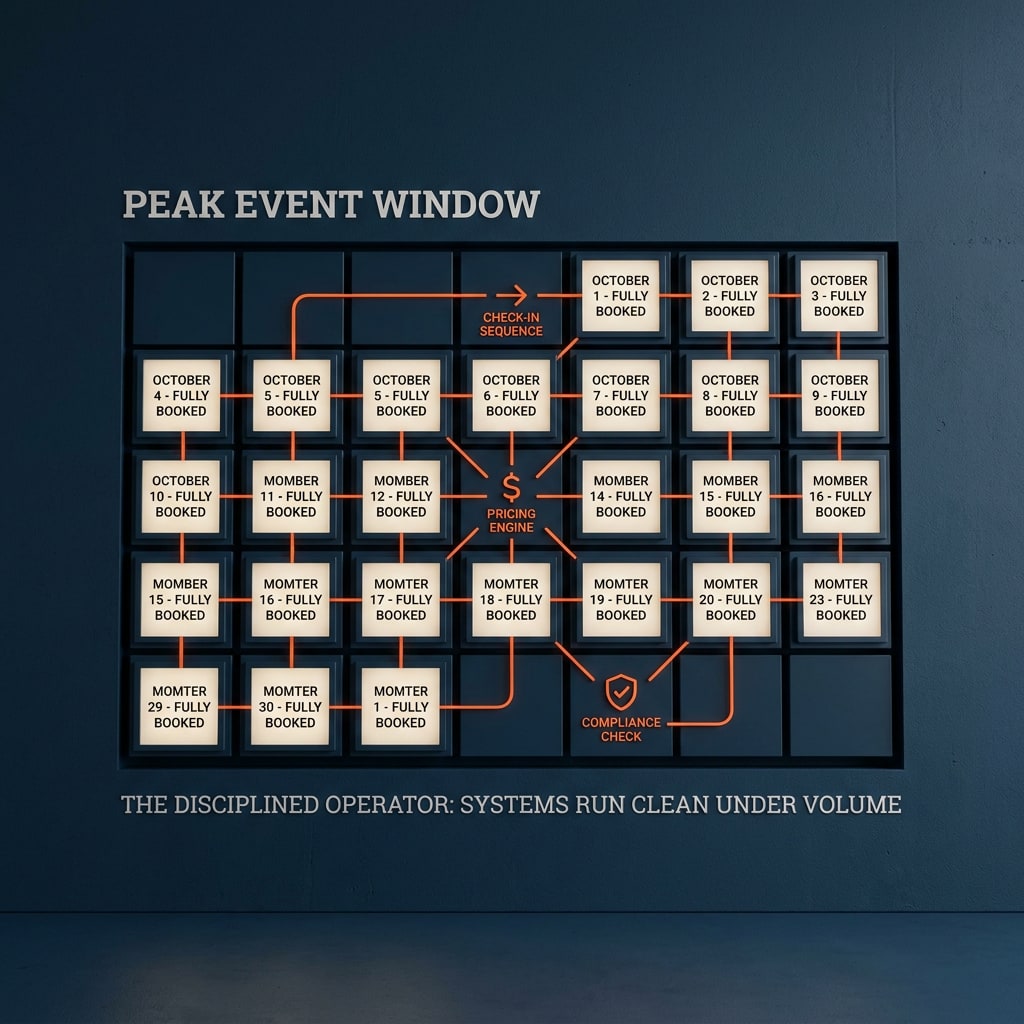
They built guest systems before the surge. Automated check-in sequences. House rules delivered in stages. Day-of communication flows that don't need the operator to remember to send them. The operators running clean right now aren't manually sending check-in instructions to 47 guests. The system is handling it.
Want to see how dynamic pricing works in practice? The World Cup is the live case study. Operators who deployed pricing systems adjusting based on comp data and booking pace filled calendars. Operators who set a number and hoped are sitting on gaps.
They stayed legal. Verified permits before listing. Confirmed platform compliance. Didn't cut corners because the event was big. Operators who skipped this step are finding out what enforcement looks like when the city is paying attention.
The Split: Disciplined operators read demand curves, automate guest flows, and verify compliance before the surge hits. Hype-chasers set vanity rates, run manual operations, and bet on light enforcement. The World Cup separates the two groups in real time.
Build for the Calendar, Not the Cup
The World Cup ends July 19. The calendar doesn't stop.
Next megaevents: F1 US races in Austin (October 23-25, 2026) and Las Vegas (November 19-21, 2026). LA 2028 Olympics. The Super Bowl rotates annually. College football championships. Major conferences. Music festivals.
The operators who win aren't scrambling for this event. They built systems that perform on any event.
Every megaevent is a rehearsal for the next one. The skills that pay during the World Cup compound across your career: demand reading, pricing discipline, guest automation, compliance verification.
Operators who treat the World Cup as a one-time windfall will scramble again for the next event. Operators who treat it as a systems validation exercise will be ready when F1 Austin arrives in October.
This is why we start operators on rental arbitrage before they buy properties. You learn operational systems on someone else's balance sheet. By the time you're buying door three, guest communication flows are built. Pricing discipline is trained. The compliance checklist is running.
What Works: Megaevents reward operators who built repeatable systems, not operators who chase individual spikes. The calendar is full of compression windows. Build once. Run forever.
What to Do With What You're Seeing
If your calendar is full and your systems ran clean through the World Cup compression window, this event confirmed what you built. Document it.
Write down what worked. What you automated. What you priced. What your booking pace looked like. What your guest communication sequence was. What compliance steps you verified. That documentation becomes your playbook for the next event.
If your calendar has gaps and the event exposed friction, this is the data. Don't rationalize it. Don't blame the market. Don't tell yourself the next event will be different.
Fix the sequence before the next event.
Operators sitting on empty dates right now know what broke. Pricing was wrong. Systems weren't built. Compliance wasn't verified. Guest experience wasn't automated. The World Cup didn't create those problems. It made them visible.
F1 Austin is four months away. You have time to build the systems before the next compression window. The question is whether you'll use it.
The teams leave July 19. The operators who built systems are still booked in August.
Your Next Step: If the World Cup exposed gaps in your operation, fix them before F1. If it confirmed your systems work, document the playbook. Either way, the data is live. Use it.
Frequently Asked Questions
How far in advance should I set pricing for megaevents like the World Cup? Three to six months before the event. International travelers booking World Cup trips reserve accommodations in February through April, not weeks before arrival. Operators who waited until May to set rates missed the early-booker window where most conversions happen.
What's the difference between pricing for occupancy vs. pricing for RevPAR? Occupancy measures how many nights you fill. RevPAR (Revenue Per Available Room) measures how much money you made per available night, whether it booked or not. A property at 85% occupancy and $650/night generates higher RevPAR than a property at 40% occupancy waiting for $1,200/night bookings. RevPAR is the number that matters.
Do I need automated guest systems if I'm running fewer than five properties? You don't need them until surge volume hits. Then you need them immediately. The problem: you don't have time to build them when the surge arrives. Build automated check-in sequences, house rule delivery, and day-of communication flows before the compression window. Manual systems break when inquiry volume triples.
What compliance steps do I need to verify before listing during a megaevent? Permits, platform compliance, local STR regulations, occupancy limits, and parking requirements. Cities increase enforcement during high-profile events because attention is high. Operators who skipped compliance verification are getting properties pulled offline, fines issued, and guest relocations at their expense.
How do I know if my pricing is competitive during an event? Pull comp data from your market. Track booking pace for properties at different price points. Watch what's converting, not what's listed. If comparable properties at lower rates are filling while yours sits empty, your price is wrong. Adjust before the compression window closes.
Should I treat every megaevent as a separate strategy? No. Build systems that work across all events. The skills that pay during the World Cup (demand reading, pricing discipline, guest automation, compliance) are the same skills that pay during F1, the Super Bowl, and local festivals. Build once. Run forever.
What should I do if my World Cup calendar has gaps right now? Lower your rates to fill the remaining dates if there's still time. Document what broke (pricing, systems, compliance). Fix the sequence before F1 Austin in October. The World Cup exposed the gaps. F1 will expose them again if you don't build the systems.
How do rental arbitrage operators handle megaevent surges differently than property owners? The operational systems are the same. Rental arbitrage operators learn those systems on someone else's balance sheet, which means lower risk while building guest flows, pricing discipline, and compliance verification. By the time they buy properties, the systems are already running.
Key Takeaways
Megaevents expose operational discipline. They don't create new operators or teach new skills. They reveal who built systems and who's been winging it.
Pricing wins when you fill the compression window, not when you set vanity rates. A filled calendar at $650/night beats an empty calendar waiting for $1,200/night.
Manual guest operations break under surge volume. Automate check-in, house rules, and communication flows before the event, not during it.
Compliance violations spike when cities pay attention. Verify permits, platform compliance, and local regulations before listing during high-profile events.
Build for the calendar, not the cup. The skills that pay during the World Cup compound across F1, the Super Bowl, and every other compression window.
F1 Austin is four months away. You have time to fix what the World Cup exposed. The question is whether you'll use it.
Book a free STR diagnostic: cashflowdiary.com/diagnostic
We'll look at your operation, identify what's working and what's creating friction, and map the systems you need before the next event window opens.
The World Cup is teaching the lesson in real time. The operators learning from it will be ready when F1 arrives.
Disclaimer: Educational content only — not financial, legal, or tax advice; results vary.
See our full Earnings Disclaimer and Affiliate Disclosure for complete details. © 2026 West Egg Enterprises, Inc. All rights reserved.