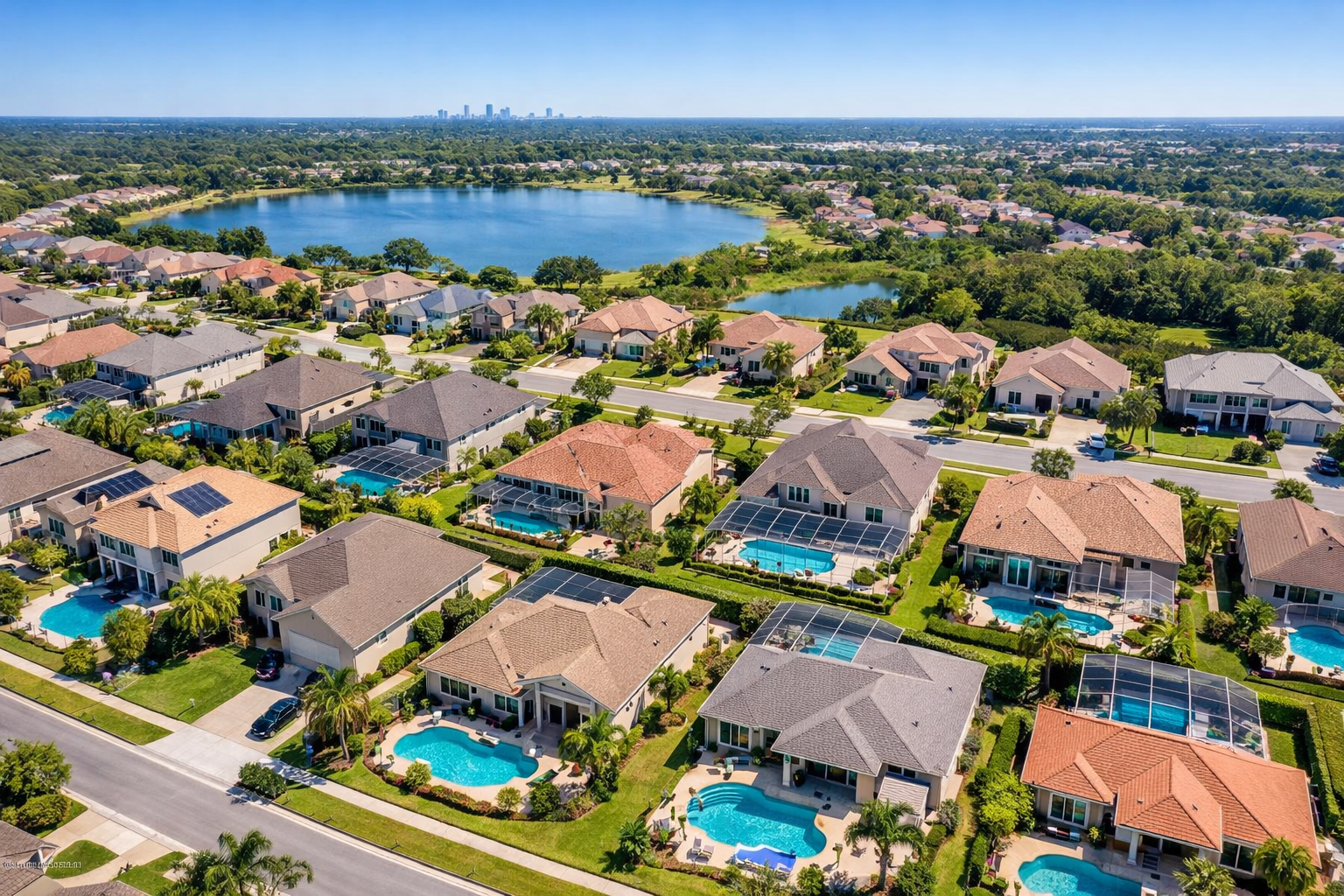
A Texas entrepreneur with 50+ paid-off vehicles asked Reddit last week: is the Orlando STR market still worth entering? The thread went quiet. Here's the actual answer — with numbers from Davenport and Kissimmee specifically.
If you're already generating cash flow from one business and looking to plant your first STR flag, Orlando is one of the few markets where the demand fundamentals are genuinely durable. But the "Orlando STR market" is too broad to invest in. The micro-market you pick — Davenport, Kissimmee, or International Drive — determines whether you're building a cash-flowing asset or competing against 10,000 other listings for scraps.
Here's how to read the numbers and make the right call.
Why Orlando Keeps Drawing STR Investors (The Theme Park Math)
Orlando isn't a seasonal market. It's a year-round demand engine built on three overlapping pillars: Walt Disney World, Universal Orlando, and a convention industry that brings over 2.5 million business travelers through the Orange County Convention Center annually.
That demand profile means you're not dependent on a single travel window. Families book months out for spring break and summer. Couples take long weekend trips in fall. Convention attendees fill mid-week gaps that most vacation markets can't touch. The result is one of the most consistent occupancy floors in the country.
The 2025 numbers reflect this: the broader Orlando metro STR market averages 68–74% occupancy year-round, with ADR (average daily rate) sitting in the $145–$200 range depending on property type, distance to attractions, and amenity set. Annual RevPAR (revenue per available room) for a well-optimized 3-bedroom unit in a top performing submarket typically lands between $38,000 and $52,000.
For a rental arbitrage operator — someone who leases a unit and subleases it as a short-term rental — those numbers translate to real margin once you strip out your master lease, utilities, and platform fees.
Davenport vs Kissimmee vs International Drive: Which Micro-Market Wins in 2025?
The three major STR submarkets in the Orlando area each serve a different guest profile. Understanding the split is the most important decision you'll make before signing a lease.
Davenport (Polk County)
Davenport sits southwest of Disney — about 15–25 minutes to the parks depending on where you're located. The guest profile skews toward large family groups and multi-generational travel: people who want space, private pools, and proximity to Disney without paying I-Drive hotel prices.
2025 averages for Davenport:
ADR: $155–$185/night (3–5 bedroom homes perform best)
Occupancy: 66–72%
Peak season boost: 15–22% ADR increase in June–August and December holiday window
Regulation environment: Polk County maintains a short-term rental registration requirement but currently has no licensing cap or zoning restrictions that prevent new operators from entering
The downside: Davenport inventory has grown substantially since 2021. New purpose-built vacation rental communities (like Solterra Resort and ChampionsGate) have added significant supply. You'll compete against professionally managed listings with resort-style amenities. Solo operators without a pool or game room will underperform.
Kissimmee (Osceola County)
Kissimmee is closer to Disney's main entrance and has better access to the US-192 corridor, which runs closer to the park gates. Guest profile is more diverse: budget-conscious families, international travelers, and group trips for sports tournaments at nearby ESPN Wide World of Sports.
2025 averages for Kissimmee:
ADR: $130–$165/night
Occupancy: 68–75% (slightly higher than Davenport due to broader guest mix)
RevPAR advantage: Higher occupancy partially offsets the lower ADR
Regulation environment: Osceola County requires a Tourist Development Tax registration and a vacation rental license, but no hard caps exist as of early 2025
For rental arbitrage specifically, Kissimmee offers more apartment and townhome inventory than Davenport's predominantly single-family vacation home stock. That means lower upfront setup costs if you're entering the market with a single unit rather than a full house.
International Drive (Orange County)
I-Drive caters to a different traveler entirely — convention attendees, couples, and guests who want walkability to restaurants and entertainment. ADR runs $120–$155 for condos and studio units. However, Orange County has passed stricter STR regulations, including registration requirements and potential community-specific restrictions in HOA-governed buildings. Verify zoning compliance before signing anything.
The verdict for 2025: For new rental arbitrage operators with budget constraints, Kissimmee offers the best entry point — lower setup costs, strong occupancy, and a regulation environment that remains open. Davenport is the better play for operators willing to furnish a 4–5 bedroom home with a pool who want to target the premium family segment.
The Oversaturation Question: Is Orlando Too Crowded for New Entrants?
It's a fair concern. The data from AirDNA shows Orlando metro total active STR listings grew from roughly 35,000 in 2020 to over 85,000 in 2024. Supply has more than doubled. So why isn't the market collapsing?
Two reasons.
First, demand has kept pace. Disney resort capacity has expanded, Universal's Epic Universe park is set to open in 2025, and the convention calendar remains at pre-pandemic levels. New supply has largely been absorbed.
Second, STR markets don't saturate uniformly. They segment. The listing count that matters isn't total Orlando listings — it's listings in your specific property type, price tier, and location radius. A 4-bedroom home with a pool and game room in a gated Davenport community doesn't compete with a 1-bedroom Kissimmee condo. They're serving different buyers entirely.
The operators getting squeezed in 2025 are mid-tier listings: 2-bedroom apartments without differentiated amenities, priced above budget options but without the premium features to justify it. If you have a clear amenity stack and nail your pricing strategy, the oversaturation narrative doesn't apply to you.
Rental Arbitrage in Orlando: How to Start Without Buying a Property
[Rental arbitrage](/blog/rental-arbitrage) is the process of leasing a long-term rental from a landlord and subleasing it as a short-term rental on platforms like Airbnb and Vrbo. You don't need to own property. You need landlord permission, a solid lease structure, and enough upfront capital to furnish and set up the unit.
In Orlando, the arbitrage model is viable for two reasons: the rental market has enough long-term inventory that landlords willing to work with STR operators exist, and the STR demand is strong enough to generate margin above your master lease cost.
Here's what the math looks like for a 3-bedroom Kissimmee townhome in 2025:
Master lease: $2,200–$2,600/month
Furnishing + setup (one-time): $8,000–$14,000
Monthly operating costs (utilities, cleaning, platform fees, supplies): $900–$1,400
Monthly gross revenue (68% occupancy at $145 ADR): ~$2,960
Net monthly cash flow: $400–$800 before taxes and reserves
That's a conservative baseline. Properties with a private pool, optimized listings, and strong review history can run 10–15% above average ADR and push toward $1,200–$1,500/month net.
The key to making arbitrage work [without owning property](/blog/short-term-rental-without-owning) is your landlord agreement. You need a clause that explicitly permits subletting for short-term use. Don't assume verbal approval protects you — put it in writing before you sign.
The Numbers You Need Before You Commit (ADR, Occupancy, Regulations)
Before you sign a lease or move forward on any Orlando unit, verify these data points for your specific address:
Occupancy benchmarks by property type (Kissimmee/Davenport, 2025):
Studio/1BR: 60–65% occupancy, $95–$125 ADR
2BR townhome/condo: 65–70% occupancy, $115–$145 ADR
3BR home: 68–74% occupancy, $140–$175 ADR
4–5BR home with pool: 70–76% occupancy, $175–$230 ADR
Regulatory checklist for Osceola County (Kissimmee):
Tourist Development Tax registration (mandatory)
State of Florida Vacation Rental License (required for 3+ units; verify for single-unit operators)
Check HOA rules if the property is in a community — many HOA-governed communities in Kissimmee prohibit STRs or restrict minimum stays
Regulatory checklist for Polk County (Davenport):
County business tax receipt
State vacation rental license
No zoning cap as of Q1 2025, but verify with Polk County Development Office for your specific parcel
Use AirDNA, Rabbu, or Mashvisor to pull comp data for your specific address before committing. Pull at least 30 comparable listings, filter by bedroom count and proximity, and use median (not average) to avoid high-performer distortion.
What a Diversified Operator Should Know Before Entering a New Market
If you're coming from a different business — whether that's a vehicle fleet, a service business, or any other income stream — the transition to STR follows a predictable pattern. The biggest risk isn't market oversaturation. It's operational complexity in a market you don't yet know.
A few things that will save you money in year one:
Property management software matters from day one. Tools like Hospitable, OwnerRez, or Lodgify handle channel syncing, automated messaging, and dynamic pricing in ways that manual Airbnb management can't match. Your occupancy rate will be higher in month three if you automate from the start rather than retrofitting later.
Dynamic pricing is non-negotiable in Orlando. The gap between a holiday weekend rate and a mid-week January rate in Orlando can be 40–60%. Manual pricing leaves serious money on the table. Use PriceLabs or Wheelhouse and let the algorithm capture peak demand automatically.
Your cleaning operation is your supply chain. In a high-turnover STR market like Orlando — where same-day turnovers between guests are common on peak weekends — your cleaner reliability determines your review score more than any other factor. Line up a primary cleaner and at least one backup before your first booking.
Start with one unit and systemize before scaling. The [best STR investors](/blog/best-statefor-airbnb) treat their first unit as a learning lab, not a blueprint. Market conditions vary by street, not just by city. Get one unit to 70%+ occupancy before adding a second.
Your 30-Day Orlando STR Launch Plan
Here's how to move from decision to operational in 30 days if you're entering the Davenport or Kissimmee market through rental arbitrage.
Days 1–7: Market validation
Pull comp data for your target zip codes using AirDNA or Rabbu
Identify 5–10 landlords or property managers open to STR subletting (search Zillow and Facebook Marketplace, filter for furnished rentals as a starting signal)
Review Osceola or Polk County STR registration requirements and begin the paperwork
Days 8–14: Secure the unit
Negotiate lease terms including explicit STR subletting permission
Confirm HOA rules if applicable
Finalize your furnishing budget and timeline
Days 15–22: Setup and listing
Furnish the unit with a guest-optimized layout (prioritize bedroom count clarity, amenity photography, and strong wi-fi)
Create listings on Airbnb and Vrbo simultaneously
Set up dynamic pricing via PriceLabs from day one
Days 23–30: Pre-launch
Complete county registration and tax setup
Do a soft opening with a discounted rate to generate your first reviews
Set up your management software and automate your guest messaging sequences
If you want a complete week-by-week framework with templates, the STR Blueprint walks through exactly this process for first-time operators launching in competitive vacation markets.
The Bottom Line
Orlando's STR market is not saturated — it's segmented. The operators who struggle are chasing the wrong property type in the wrong micro-market with no differentiated amenity stack. The operators who win in 2025 are picking their micro-market deliberately, matching their property to a guest profile, and running the numbers before they sign.
For a capital-ready investor looking at Airbnb arbitrage in Orlando Florida, the path is clear: start in Kissimmee with a 3-bedroom unit, model conservative occupancy at 68% and ADR at $145, run the arbitrage math against actual master lease comps in your zip code, and launch with one unit before scaling.
The market is open. The demand is real. Your next move is to decide which side of the Kissimmee/Davenport line fits your budget and guest strategy — and then act.
Ready to build your STR portfolio? The [5-Day STR Challenge](#) walks you through the exact steps to find your first unit, negotiate landlord approval, and launch your first listing — even if you've never done this before. Start this week.