I closed my first property on June 18, 2008 with a 398 credit score, no cash, and while squatting in foreclosure. Three months later, Lehman collapsed. Your first deal's job isn't profit. It's making you someone who closes.
By J. MasseyJune 11, 2026· 11 min read
Share
Disclosure: This post may contain affiliate links. If you purchase through our links, we may earn a commission at no extra cost to you. We only recommend tools and services J. Massey's team actually uses.
Learn more →
Table of Contents
TL;DR: I closed my first property on June 18, 2008 with a 398 credit score, no cash, and while squatting in foreclosure. Three months later, Lehman Brothers collapsed. That single deal became a portfolio, then a company serving 19,000+ subscribers. Your first deal's job isn't profit. It's making you someone who closes.
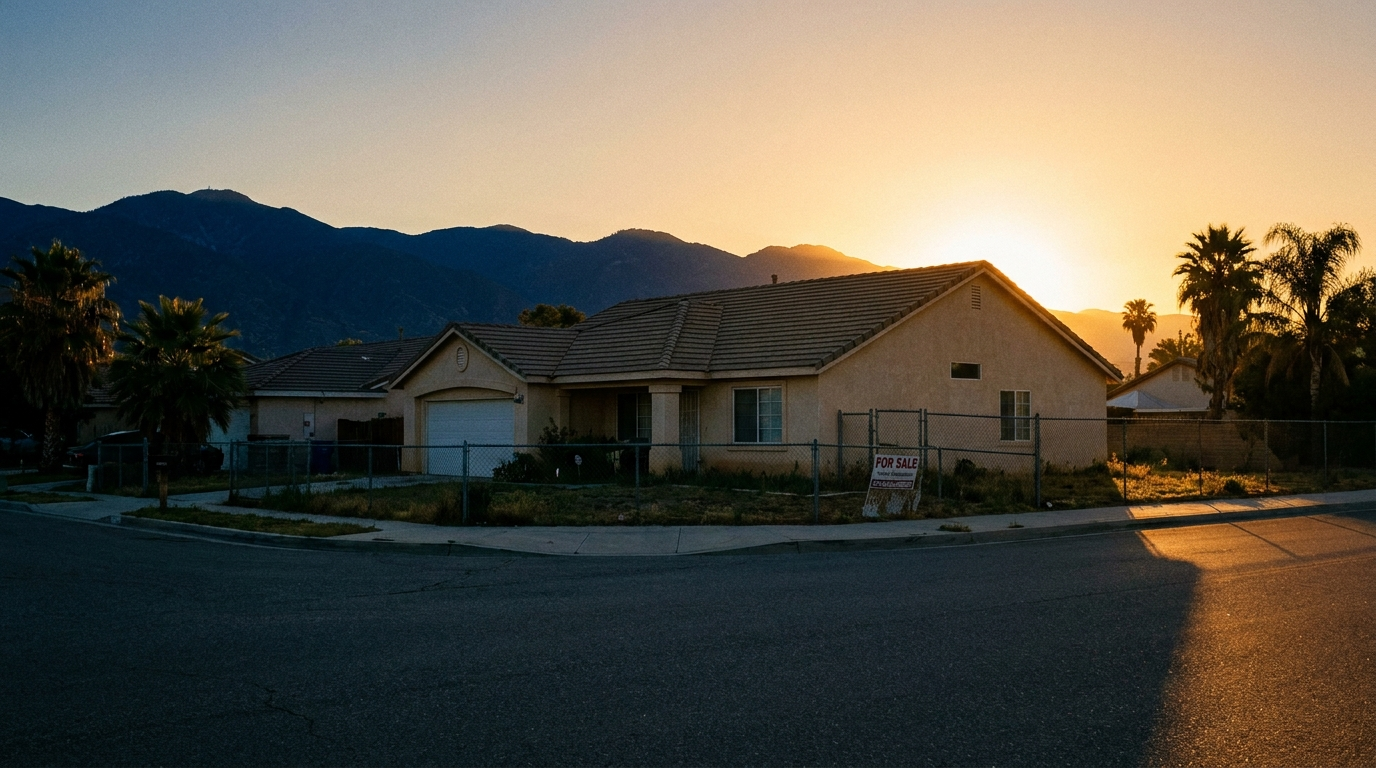
June 18, 2008. I closed on 596 North Flores Street in San Bernardino, California.
I've spent 15+ years in this space, trained more than 10,000 operators through CashFlowDiary, and recorded 237+ podcast episodes breaking down the deals that work and the ones that don't. The pattern below shows up in every cycle.
Credit score: 398. No cash to close, so I had to find private capital. Didn't know what escrow was. Learned the terminology in real time while the paperwork sat in front of me.
I was squatting in bank-owned property at the time.
The house I was buying was in foreclosure. The house I was living in was in foreclosure. I was solving a problem I was personally living inside of. Didn't register the paradox until I sat at the closing table.
Three months later, Lehman Brothers collapsed. The financial system seized up. Foreclosures swept the country at a rate 80 percent higher than the year before. By September 2008, housing prices had dropped more than 20 percent from their peak.
I started in real estate at what conventional wisdom called the worst time.
Eighteen years later, that deal is old enough to vote. Old enough to enlist. Old enough to sign contracts.
I'm still here.
Interactive · run your own numbers
When does an arbitrage unit pay you back?
$2,200
$180
70%
$10,000
Monthly profit
$1,330
after lease + ~25% opex
Months to recoup setup
7.5
then it's pure cash flow
First profit lands in
Month 2
Compare that to 18+ months for new-build ownership.
Before I talk about the deal, I need to tell you what was happening around it. The deal didn't happen in a vacuum. It happened inside a specific set of conditions most folks would have used as reasons to stop.
No college degree. Not enough money to eat consistently, let alone pay bills. Didn't know where money was coming from most of the time. People told me to go back to school or get a job. Those options didn't fit. I knew they didn't. Didn't know why yet.
What I knew: I needed a shut-up check.
Not a fortune. Not a portfolio. A check that would shut up the noise in my head and give me enough credibility with the people around me that they'd leave me alone and let me take care of my family.
That was the real motivation. Not strategy. Not a five-year plan. Survival, and the need to prove to myself I had agency over my own life at a moment when both agency and autonomy felt under consistent threat.
Key point: Fear doesn't wait for perfect conditions. The threat to your agency is more expensive than the mistakes you'll make closing your first deal.
The Blueprint I Already Had
596 North Flores Street, San Bernardino — the 2008 first deal that started the sequence
Before real estate, I sold on eBay. Not products I owned. Products I sourced from garage sales.
Someone would sell something for $5 at a garage sale. I'd buy it, repackage it, reprice it, list it on eBay where the addressable market was different in size and economics. The person at the garage sale got what they wanted. The buyer on eBay got what they wanted. I contributed time, knowledge about what would sell, and the willingness to move things between two markets that weren't talking to each other.
That was the blueprint. Didn't know it yet.
When a friend told me I should get into real estate investing, the same logic applied. A property sitting in foreclosure wasn't reaching the market that needed it. I could be the person who moved it. The canvas changed. The logic didn't.
"Comfort kills dreams long before failure does."
— J. Massey · CashFlowDiary
I also had nothing better to offer. My best ideas up to that point had created the situation I was trying to escape. Didn't have the luxury of saying "I think it should be done this way." I did what my mentor said, exactly as he said it, because I had no better alternative. Sometimes not knowing enough to argue is an advantage. I was ignorant enough to execute.
Key point: The skill was already there from eBay arbitrage. Real estate arbitrage uses the same framework: move an asset from where it's undervalued to where it finds the right buyer.
The Closing Table
Surreal is the only word I have for what it felt like when that deal closed.
Almost an out-of-body experience. Couldn't believe I'd done it. Simultaneously, this irrational thought ran underneath everything: somebody's going to find out I'm squatting in bank-owned property and come take this from me. Too good to be true. Not for someone like me. I'm from Fayetteville, North Carolina, 28306. Military kid. This couldn't be happening.
But it was.
The house I was buying was in foreclosure. I was buying it out of foreclosure with a 398 credit score, private capital I had to find because I had no cash, and terminology I was still learning mid-transaction. And it closed.
What I understand now that I didn't then: the deal didn't close because the conditions were right. It closed because I didn't have another option. I needed to eat. Comfort kills dreams long before failure does, and I didn't have the luxury of comfort. So I moved.
Key point: Deals close when the operator has no exit. Comfort is the bigger threat than market conditions.
Your First Deal's Job Isn't Profit
The property at 596 North Flores was in rough shape. The numbers weren't clean. I made mistakes, some I paid for in time and some in money. I'm not going to pretend the first deal was a masterclass in execution, because it wasn't.
What it was: the thing that made me a person who closes.
That identity shift is the real asset from a first deal. Not the cash flow. Not the equity. The transformation from someone who studies real estate to someone who operates it. Before that closing, I was someone who was trying. After it, I was someone who had done it. Those are different people with different relationships to the next decision.
By the time I bought my second property, I wasn't guessing. I had systems. Not because I was smarter. Because I had run one address. Not studied it. Run it.
Analysis paralysis kills more investing careers than bad deals do. Nearly 70 percent of first-time real estate investors never close a single deal, not because the market is too hard, but because preparation becomes a permanent state. The first deal's job is to end that state. Its job is to make you a person who closes.
Key point: The asset you're buying with your first deal isn't the property. It's the identity of someone who closes deals.
What Waiting Costs
Study mode vs. operator mode — the identity shift happens at the closing table
The question beginners ask: "What if I buy the wrong deal and lose everything?"
The question operators learn to ask: "What does waiting cost me in compounding experience, equity, and income?"
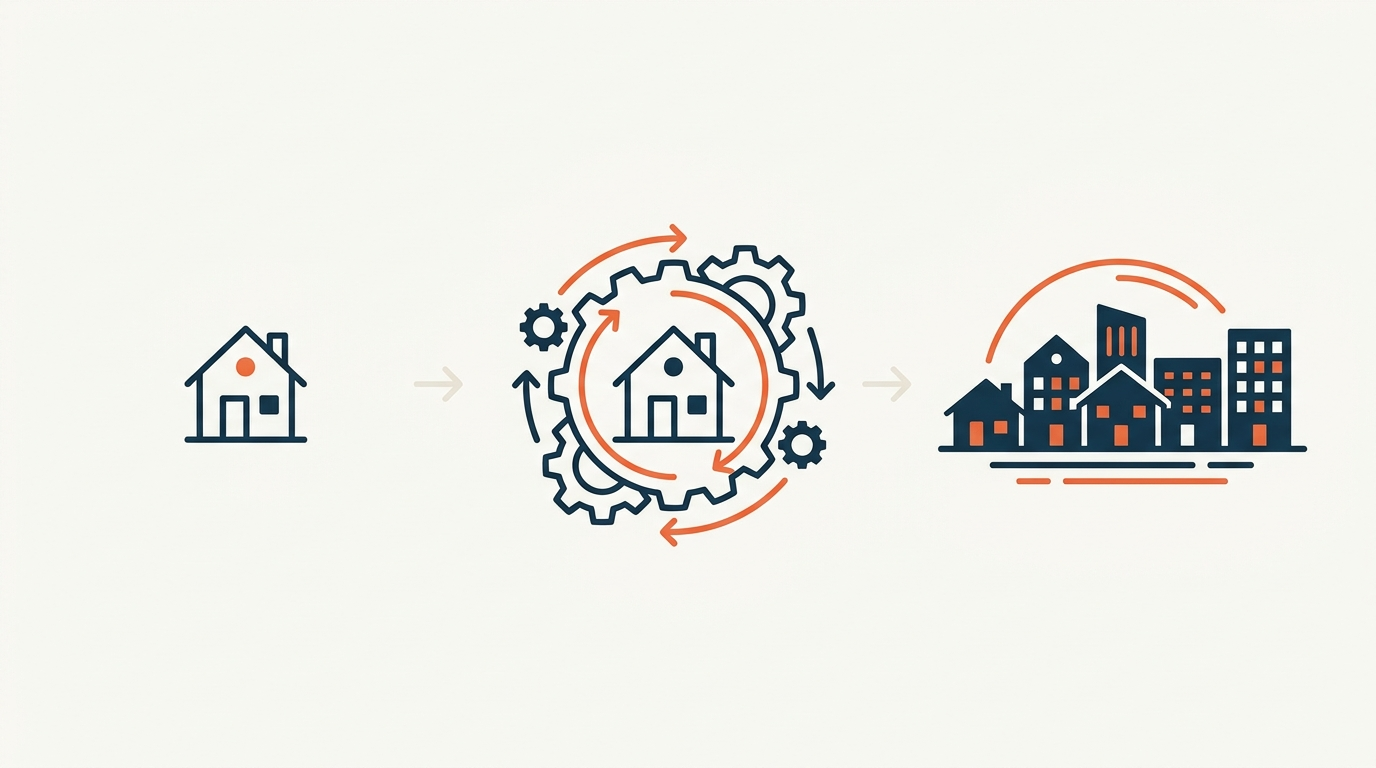
One address became a system. The system became a portfolio. The portfolio became a company. That company now reaches 19,000+ subscribers and has helped train more than 10,000 entrepreneurs. All of it traces back to one closing on one foreclosed property in San Bernardino in 2008.
If I'd waited for the right time, I would have lost years. The skills built at 596 North Flores became the foundation for the next property, and the next, and every system I've built since. The sequence matters more than the timing. Always.
Key point: Waiting doesn't protect you from mistakes. It protects you from compounding. The cost of a bad first deal is measured in months. The cost of no deal is measured in years.
What I'd Tell the 2008 Version of Myself
He deserves to hear: you got this.
He deserves to have people around him who believe him. He deserves to hear "good job." Simple as that. He deserves to know it's going to be okay, that the thing he's afraid isn't going to happen won't happen, and that what will happen is something he can't yet see.
He deserves to know he's going to make a difference, not only for himself, but for a lot of other folks he doesn't even know yet. They're going to thank him and be grateful for their new life, and they're going to give him credit he doesn't feel like he deserves, because he was trying to eat.
That's the part that still lands differently every time I think about it. The whole thing started because I was trying to eat. Somewhere inside that survival, a blueprint got built that other folks are now living off of.
Key point: The systems you build to survive become the frameworks other operators replicate. Your survival blueprint has value beyond your own operation.
The Real Mission
There are still a lot of folks who don't know the blueprint exists.
Men, specifically, who suffer in silence. Who feel like mediocrity is what they were built for, like it's the only option available. Their agency has been stolen and replaced with cheap substitutes. They don't live. They exist. They died a long time ago and are waiting to be buried.
I won't disagree with the feeling. But I will say what's missing is the capacity to believe and to build. That capacity gets restored. Not with a course or a motivational speech. With a result. A tangible, specific result a man created with his own hands from what looked like nothing.
Doesn't have to be a lot. Could be $5. The amount isn't the point. The point is that he took himself from nothing, supposedly, and produced something real. Something other folks wanted. Something they thanked him for.
That's what 596 North Flores did for me. It was my proof of agency. My first result I built myself, from a 398 credit score and a private lender and terminology I was learning mid-transaction.
Now that's what I spend every day trying to hand to someone else.
Key point: Agency gets restored through proof, not theory. One result you built yourself is worth more than a hundred courses you completed.
Your Own 596 North Flores Is Closer Than You Think
One address becomes a system, the system becomes a portfolio
If you're reading this and wondering whether folks like you get to do this, the answer is yes.
Not because the conditions are perfect. Not because you have everything figured out. But because the operators who build real portfolios aren't the ones with the best timing. They're the ones who moved when others didn't, learned what the people waiting never learned, and built systems from the mistakes they made early.
Your first deal's job is to make you a person who closes. One address. That's all it takes to start the sequence.
The deal is old enough to vote now. The systems it built are still running.
Start.
Key Takeaways
Your first deal's job isn't profit. It's the identity shift from someone who studies real estate to someone who operates it.
I closed my first property with a 398 credit score, no cash, and while squatting in foreclosure during the 2008 collapse. Timing isn't the variable. Execution is.
One address became a system. That system became a portfolio. That portfolio became a company serving 19,000+ subscribers. The sequence compounds.
Analysis paralysis kills more careers than bad deals. Nearly 70 percent of first-time investors never close because preparation becomes permanent.
Waiting doesn't protect you from mistakes. It protects you from compounding. The cost of a bad deal is months. The cost of no deal is years.
Agency gets restored through proof, not theory. One result you built yourself matters more than a hundred courses you completed.
The operators who build portfolios aren't the ones with perfect timing. They're the ones who moved when others didn't and built systems from early mistakes.
We'll find where the leak is, what's blocking you, and what the next move is. One conversation. No pitch. You leave with the diagnostic and the next step.
FAQs
Do I need good credit to close my first real estate deal?
No. I closed my first property with a 398 credit score. You need private capital or creative financing, not perfect credit. The operator matters more than the FICO score.
What if I don't have cash to close?
Find private lenders. I didn't have cash either. Private capital comes from people who want returns their bank account won't give them. You bring the deal and the execution. They bring the capital.
Should I wait for a better market before buying my first property?
No. I started during the 2008 collapse. Waiting costs you years of compounding experience and systems development. The sequence matters more than the timing.
What's the biggest mistake first-time investors make?
Permanent preparation. Nearly 70 percent of first-time investors never close a deal because they're waiting to know enough. Your first deal's job is to end the study phase and start the operations phase.
How long does it take to go from one property to a portfolio?
Depends on the systems you build from property one. One address became a system. That system became a portfolio. For me, that timeline was 18 years from first close to 19,000+ subscribers. Your timeline depends on how fast you systematize.
What if my first deal goes wrong?
The cost of a bad first deal is measured in months. The cost of no deal is measured in years. You're not buying perfection. You're buying the identity shift from someone who studies to someone who operates.
Do I need a mentor to close my first deal?
I had one. I did what he said because I had nothing better to offer. A mentor shortens the learning curve, but what you need most is the willingness to move when you don't have all the answers yet.
What's rental arbitrage and why start there?
Rental arbitrage means you lease a property and rent it out short-term. You learn operations before you take on ownership risk. It's the same blueprint I used on eBay: move an asset between two markets without owning it first.
Earnings & Income Disclaimer: West Egg Enterprises, Inc. / CashFlowDiary does not guarantee any specific income, profit, or financial results from information on this site. Individual results vary based on effort, experience, market conditions, and other factors outside our control. Past performance does not guarantee future results. Nothing on this site constitutes financial, legal, or tax advice.