You Don't Have a Hunger Problem. You Have a Gap Problem.
You understand the sequence — so why aren't you moving? It’s not a knowledge or belief problem. It’s the gap between where you are and what you want, and most operators shrink their desire instead of closing it.
Disclosure: This post may contain affiliate links. If you purchase through our links, we may earn a commission at no extra cost to you. We only recommend tools and services J. Massey's team actually uses.
Learn more →
TL;DR: You understand the sequence. But you're not moving. The problem isn't knowledge or belief. It's the gap between where you are and what you want. Most operators shrink their desire instead of closing the gap. That's what kills forward motion.
Cash-flowing assets before primary residence. Systems before scale. Labor decoupled from income before any conversation about retirement. The math works. The framework is sound. So why aren't you moving?
I've spent 15+ years in this space, trained more than 10,000 operators through CashFlowDiary, and recorded 237+ podcast episodes breaking down the deals that work and the ones that don't. The pattern below shows up in every cycle.
Here's what drives action:
The distance between current reality and desire creates operational pain
When the gap widens, you either move toward the goal or shrink the desire
Most operators kill the desire before they fail at the goal
One question manufactures clarity: How would it feel to earn what you earn now without showing up to work?
The gap is fuel — but only if you move toward what you want, not away from it
Why Understanding Doesn't Produce Movement
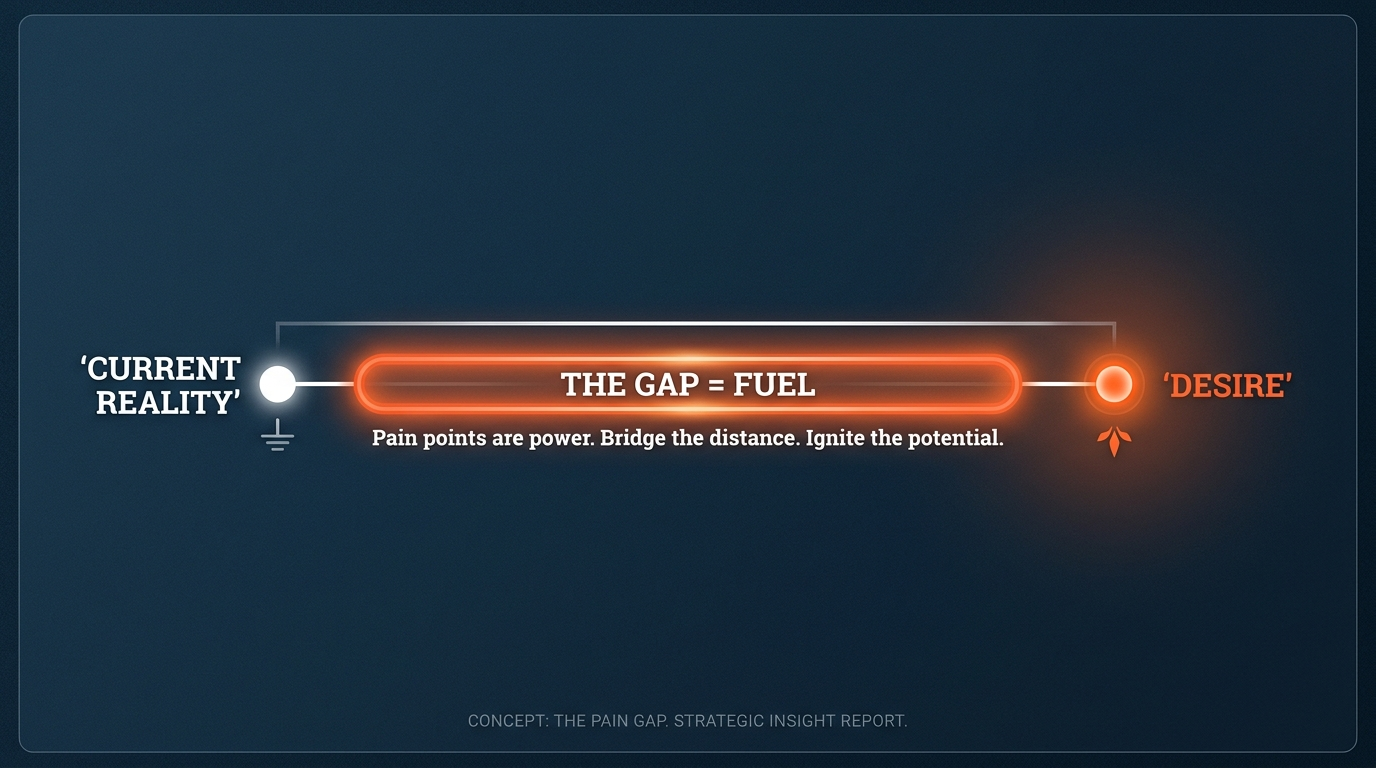
A measurement line from ‘where you are’ to ‘what you want’ — the gap
Most operators stall here. Not because they don't believe it. Not because they lack one of the four ingredients. They stall because something underneath the sequence is broken.
The distance between your current reality and what you want is supposed to be fuel. That gap drives action. The bigger the gap, the stronger the pull.
But here's what happens: most operators respond to a widening gap by shrinking the desire, not by moving toward what they want.
They fail at the desire before they ever fail at the goal.
How the Pain Gap Model Works
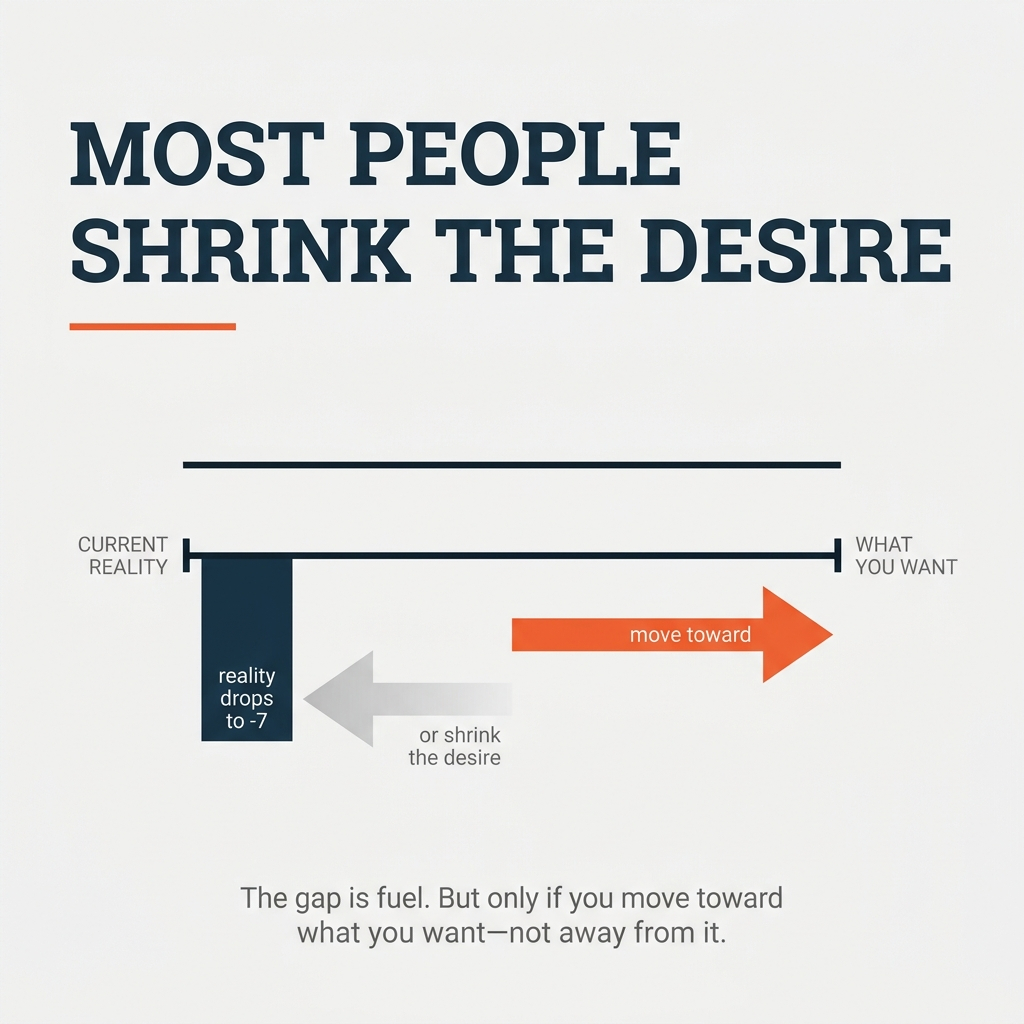
Picture a horizontal line. Your current reality sits somewhere on the left. Your desire sits somewhere on the right.
The distance between those two points is pain. Not metaphorical pain. Operational pain. The kind that wakes you up at 3am or keeps you at a job you hate or makes you miss your daughter's recital because you need the paycheck.
If everything starts at zero and what you want sits at positive seven, the distance from zero to seven is still pain. That's baseline. Seven units of distance. Seven units of fuel.
Now watch what happens when reality gets worse.
You lose a client. The furnace dies and the emergency fund is empty. Your boss adds another project and you're working weekends now. Reality doesn't stay at zero. It drops. Down to negative three. Down to negative seven.
"The gap is fuel — but only if you move toward what you want instead of away from it."
— J. Massey · CashFlowDiary
If reality drops to negative seven and your desire is still at positive seven, the distance is now 14. The gap doubled. The outcome didn't change. You still want the same thing. But the fuel driving you toward it just doubled.
This is where most operators make the move that kills them.
Key Point: The pain gap is the distance between current reality and desired outcome. When reality worsens, the gap widens without changing what you want. This creates more fuel for action, but also more pressure to reduce the desire instead of moving forward.
Two Responses to a Widening Gap
When the gap widens, you have two options.
Option One: Move Toward the Desire
Reality dropped to negative seven. The gap is 14 now. That's more pain than you've felt before. So you move. You take the first rental arbitrage deal. You build the first automated system. You make the first video.
You do the thing you've been avoiding because the pain of staying where you are finally exceeds the fear of moving. This is hunger. Real hunger.
Option Two: Lower the Desire
Reality dropped to negative seven. The gap is 14 now. That's unbearable. So you don't move toward what you want. You move the goal post.
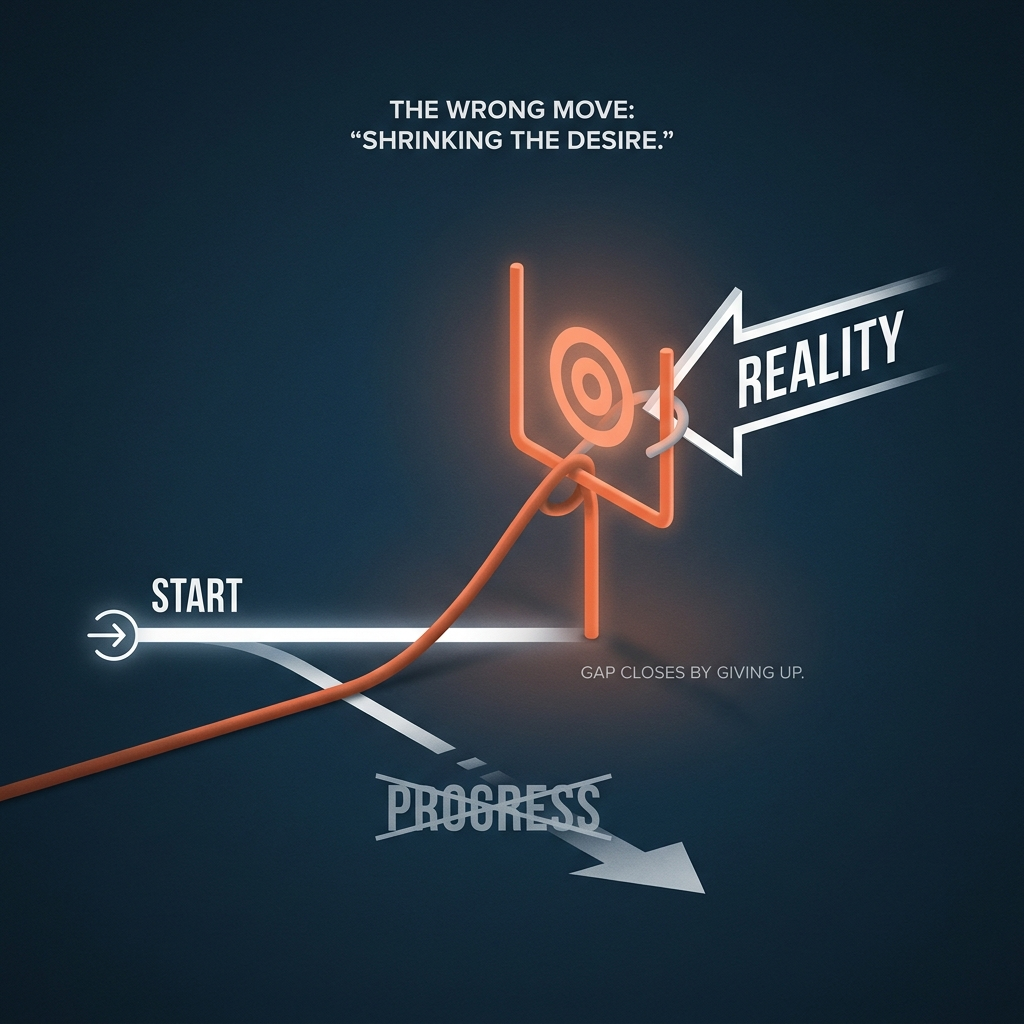
You tell yourself you didn't want that anyway. You say things like "I'm being realistic" or "that's not for me" or "I should be grateful for what I have." You shrink the desire from positive seven down to positive three. Down to zero. The gap closes. The pain stops.
And you stay exactly where you are.
Key Point: When the gap widens, you either move toward the goal or shrink the desire. Moving creates change. Shrinking feels like relief but locks you in place.
Why Lowering Desire Feels Rational
A goal being squeezed smaller — shrinking your desire is the wrong move
Here's the trap: lowering your desire feels like wisdom. It feels like maturity. Like you're being practical. Like you're managing expectations.
The voice in your head says reasonable things. "I don't need a big house." "Time with my kids matters more than money." "I should focus on gratitude."
All of those statements are true. But when you're using them to talk yourself out of what you wanted three months ago, when you're shrinking the goal because you haven't imagined a way to get there, that's not wisdom.
That's comfort addiction.
We get addicted to our comfort more than we need what we hope for in the future. The pain of the gap is real. But the fear of what it takes to close the gap is bigger. So we kill the desire instead of moving toward it.
The outcome looks the same from the outside. You're still at negative seven. But now you've told yourself you're fine there. You've made peace with it. You've reframed the trap as contentment. And the door locks.
Key Point: Comfort addiction is when you shrink your desire to avoid the work of closing the gap. It feels rational but it's the mechanism that keeps you stuck.
The Difference Between Hunger and Preference
An arrow accelerating forward across the gap — the gap as fuel for motion
When you need to, you will.
When you need to breathe, you do everything to make sure you stay breathing. When you're hungry, not "I could eat" hungry but actually hungry, you find food. When you need a place to stay, you make it happen.
Need removes the question of circumstances. You don't think about whether it's convenient or whether you're ready or whether the timing is right. You're focused on the outcome and doing whatever you need to in order to get it.
Most of the things we say we want, we don't need. They're nice ideas. We're only willing to choose them if the circumstances are correct. If the market is right. If we have enough saved. If the kids are older. If the timing works out.
That's not hunger. That's preference. And preference doesn't close the gap.
Key Point: Need creates action regardless of circumstances. Preference waits for conditions to align. Most operators mistake preference for desire and wonder why they're not moving.
How to Manufacture the Gap Without a Crisis
Here's the question that cuts through all of it:
How would it feel if you earned exactly what you're earning right now, but you did not have to physically get up and go to work?
Same dollars. Different source.
Most operators hear that question and something shifts. Because the gap isn't about earning more. It's about where the money comes from. It's about the hours lost preparing for work, sitting in traffic, thinking about work after hours. It's about the call you don't take because you're in a meeting. The recital you miss because you need to stay late.
Same income. But 160 hours a month dedicated to something completely different.
That reframe manufactures the gap without requiring a crisis. You don't have to wait for reality to drop to negative seven. You don't have to lose the job or blow up the savings account or hit rock bottom before you move. You have to see the distance clearly.
Your reality: income tied one-to-one to labor, liquidity destroyed by the primary residence and the 401k, time sold in eight-hour blocks you don't get back.
Your desire: same dollars, but from systems that run whether you show up or not. Time freed up. Liquidity intact. The ability to say yes when your daughter's school calls.
The gap is already there. You haven't named it yet.
Key Point: The manufactured gap question separates income from labor. It creates clarity without waiting for a crisis. Same earnings, different source. That distance is the fuel.
The Diagnostic: What to Do Next
Here's what you do next.
Draw the line. Horizontal. Left to right.
Mark where your reality is right now. Not where you wish it was. Not where it was five years ago. Where it is today. Income source. Liquidity. Time. Control.
Mark where your desire is. What you want. Not the sanitized version. Not the version you've talked yourself into accepting. The thing you wanted before you started lowering the bar.
Measure the gap.
Now ask yourself: which direction are you moving?
Are you moving toward the desire? Building the first system, taking the first deal, making the first video?
Or are you moving the desire closer to your reality? Telling yourself you don't need that, reframing the trap as contentment, killing the hunger before it forces you to move?
The gap is the fuel. But only if you let it drive you toward what you want instead of away from it.
Most operators fail here. Not because they don't understand the sequence. Not because they lack the ingredients. They fail because they've spent years training themselves to shrink the desire instead of closing the gap. That's the pattern you're breaking.
Draw the line. Measure the gap. Move toward the desire. Start tomorrow.
FAQ: Common Questions About the Pain Gap
What is the pain gap?
The pain gap is the distance between your current reality and what you want. It's operational pain that drives action. The bigger the gap, the stronger the fuel for movement.
Why do I shrink my desire instead of moving toward it?
Comfort addiction. The pain of the gap is real, but the fear of what it takes to close the gap feels bigger. Shrinking the desire feels like relief. It closes the gap without requiring you to move.
How do I know if I'm lowering my desire or being realistic?
Ask: did this shift happen because you found a better path, or because you haven't imagined a way forward? If you're talking yourself out of what you wanted three months ago without a structural reason, you're shrinking the desire.
What's the difference between hunger and preference?
Hunger moves regardless of circumstances. Preference waits for conditions to align. When you need to breathe, you don't wait for convenience. When you prefer something, you wait for timing.
How does the manufactured gap question work?
It separates income from labor. Same earnings, different source. That reframe creates clarity without requiring a crisis. It shows you the gap that's already there.
What if I don't know what I want?
Go back to what you wanted before you started lowering the bar. Before you told yourself it wasn't realistic. That's your desire. The unsanitized version.
How do I stop shrinking my desire?
Name the gap. Measure it. Decide which direction you're moving. Are you building toward what you want, or talking yourself out of wanting it? The pattern breaks when you see it clearly.
What if my reality gets worse while I'm working on closing the gap?
That widens the gap. It doubles the fuel. Reality dropping to negative seven while desire stays at positive seven means the distance is now 14 instead of seven. More pain, same goal. That's when you move or shrink. Choose movement.
Key Takeaways
The distance between current reality and desire creates operational pain that drives action.
When the gap widens, you either move toward the goal or shrink the desire. Most operators shrink the desire.
Comfort addiction is when you kill the desire to avoid the work of closing the gap. It feels rational but keeps you stuck.
Hunger moves regardless of circumstances. Preference waits for conditions to align. Most things we say we want are preferences, not needs.
The manufactured gap question: How would it feel to earn what you earn now without showing up to work? This creates clarity without waiting for a crisis.
Draw the line. Mark your reality. Mark your desire. Measure the gap. Decide which direction you're moving.
The gap is fuel, but only if you move toward what you want instead of away from it.
Earnings & Income Disclaimer: West Egg Enterprises, Inc. / CashFlowDiary does not guarantee any specific income, profit, or financial results from information on this site. Individual results vary based on effort, experience, market conditions, and other factors outside our control. Past performance does not guarantee future results. Nothing on this site constitutes financial, legal, or tax advice.