The $2.8M Property vs. The $0 Down Operator: Why You're Learning STR Management in the Wrong Order
Rental arbitrage lets you learn STR operations with profit instead of debt. Most operators buy property first and spend 12+ months learning what arbitrage teaches in 90 days.
Disclosure: This post may contain affiliate links. If you purchase through our links, we may earn a commission at no extra cost to you. We only recommend tools and services J. Massey's team actually uses.
Learn more →
TL;DR: Rental arbitrage lets you learn STR operations with profit instead of debt. Most operators buy property first and spend 12+ months learning what arbitrage teaches in 90 days. The difference: in arbitrage, you pay tuition with time and smaller margins. In ownership, you pay with debt and balance sheet exposure.
Core answer:
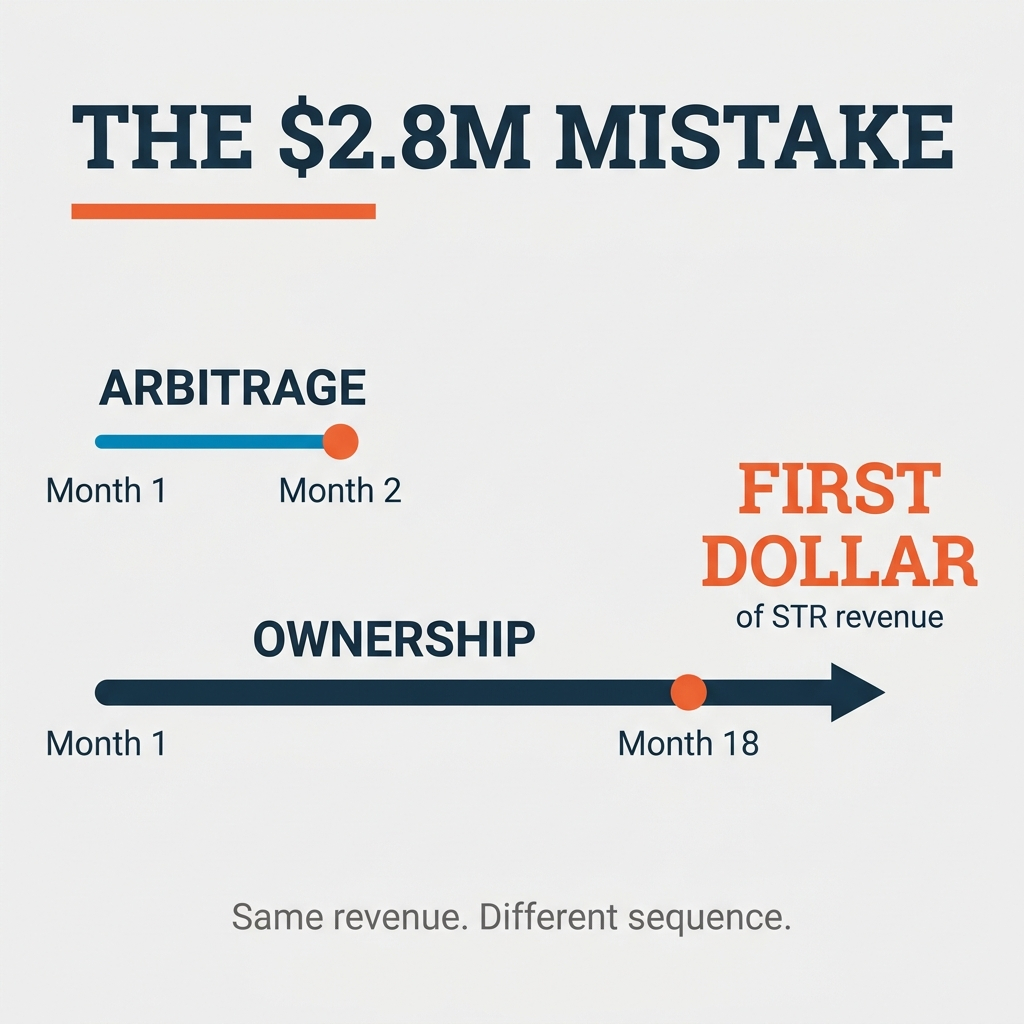
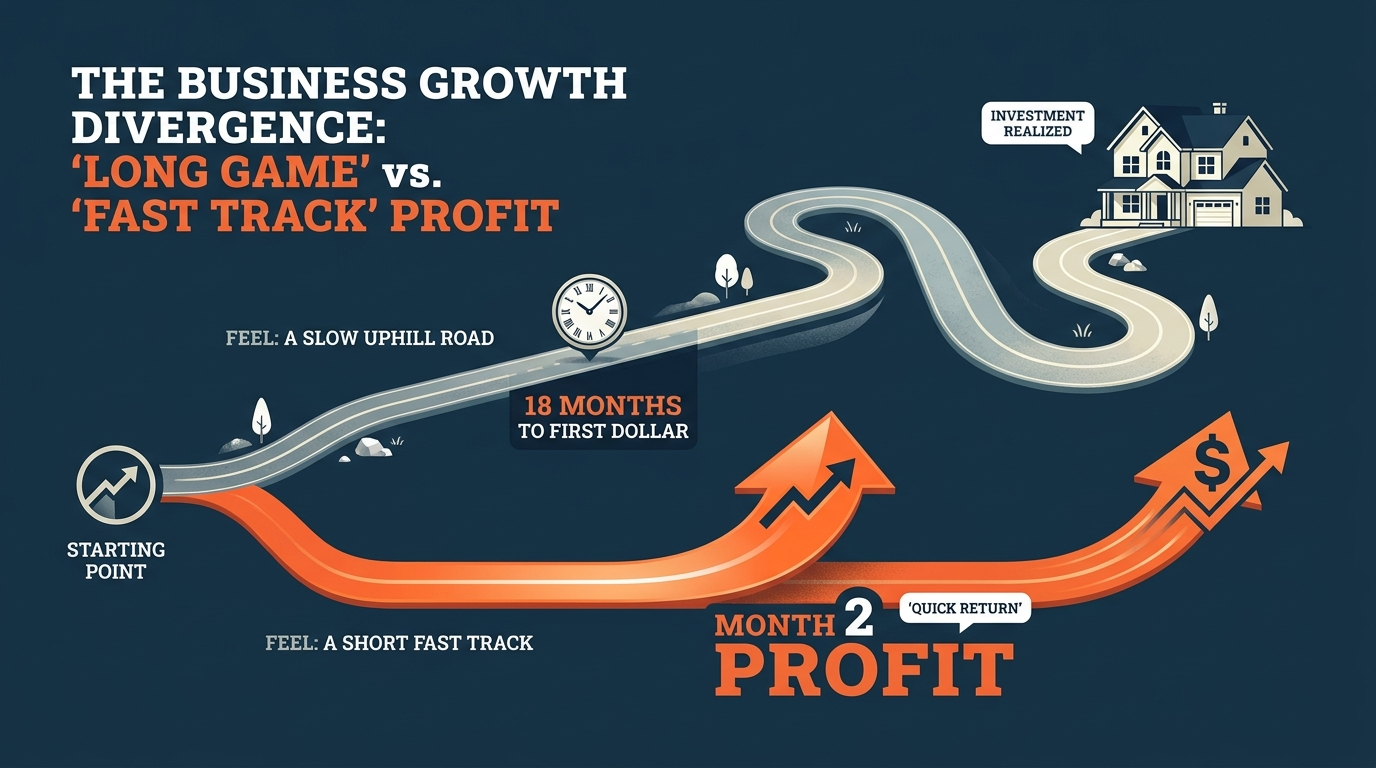
Arbitrage produces first profit in month two vs. 18+ months for new construction ownership
You learn pricing, guest profiles, cleaning ops, and review management without mortgage risk
Transition to ownership when systems run without you, not when you hit a savings number
Your arbitrage portfolio should fund the purchase, not your W-2 savings
I've spent 15+ years in this space, trained more than 10,000 operators through CashFlowDiary, and recorded 237+ podcast episodes breaking down the deals that work and the ones that don't. The pattern below shows up in every cycle.
Interactive · run your own numbers
When does an arbitrage unit pay you back?
$2,200
$180
70%
$10,000
Monthly profit
$1,330
after lease + ~25% opex
Months to recoup setup
7.5
then it's pure cash flow
First profit lands in
Month 2
Compare that to 18+ months for new-build ownership.
Someone's about to drop $2.8M on a custom-build lot in Saratoga Springs. Zoned for an inn-style guest house. Million-dollar view of the Race Course. Blueprints drawn, financing lined up. First dollar of STR revenue? 18 months out if construction stays on schedule, the market holds, and they already know how to run a short-term rental.
I produce the same STR revenue from a property I don't own. First profit hits in month two.
This isn't about fairness. It's about sequence. Most operators have it backwards.
What Operators Get Wrong About Arbitrage
Two diverging paths: slow 18-month ownership road vs fast month-two arbitrage track
Most operators treat rental arbitrage as a stepping stone. Something you do until you've got the capital to buy. A workaround for people without cash.
Wrong frame.
Marriott does it. McDonald's does it. Every major hospitality brand figured out you don't need to own real estate to control the revenue it produces. I got the idea from watching what big operators do and asking why we weren't doing the same thing at smaller scale.
The first mistake: thinking you have the capital to purchase before you've built the cash flow to support it. Operators destroy their liquidity, then go buy the asset. They spend the next 12 months learning what arbitrage would've taught them in 90 days. Difference is, now the mortgage is running while they figure it out.
"The learning happens either way. What changes is who pays for it — you with time and smaller margins, or the bank with your debt."
— J. Massey · CashFlowDiary
The learning happens either way. What changes is who pays for it.
Key point: Arbitrage lets you learn STR operations with income, not debt. Ownership makes you pay for the same lessons with mortgage payments and balance sheet exposure.
What You're Really Buying in Arbitrage
Here's the frame most operators miss.
When you sign a lease on an arbitrage property, you're buying 365 days at one location on a single contract with a 30-day payment plan. Then you resell all 365 of those days in chunks of three, seven, or fourteen nights to different guests at different price points. The markup exists because you're providing convenience and an experience that didn't exist before you built it.
Same model as a vending machine operator. Buy a case of sodas from Costco at wholesale, put them in a machine, sell them one at a time at retail. The markup exists because you're providing access, convenience, and a specific experience at a specific location. You're doing the same thing. The asset is a lease instead of a machine.
What operators don't get: you're not selling the real estate. You're selling the experience at the real estate. Walt Disney World was a swamp. The swamp didn't produce revenue. The experience built on top of it did. That's the product. That's what guests pay for.
When you understand that, you understand why arbitrage is the right starting point. You're learning how to build and sell an experience before you take on the full financial exposure of owning the physical asset underneath it.
Key point: Arbitrage is buying days wholesale and selling them retail while learning to build profitable guest experiences without mortgage risk.
What the Wrong Sequence Costs You
Operators who go straight to ownership share a pattern I've seen enough times to call it predictable. They buy because they have the capital or the credit. First year, they learn what the market pays, not what the pro forma assumed. Mid-year, they figure out the guests they designed for aren't the guests who book. They solve the cleaning problem in month eight, six months after it started costing them reviews. They build the pricing system after they've already left money on the table.
The tuition is the same either way. The financing structure changes.
In arbitrage, you pay for those lessons with time and smaller margins. In ownership, you pay with debt. The random large-ticket expenses get outsourced to the property owner when you lease. When you own, those are yours. HVAC goes out, roof needs replacing, appliance breaks on a Saturday night. All yours.
Most operators don't run that math before they buy. They see the nightly rate and the projected occupancy and stop there. They don't account for the cost of learning on debt. They don't account for the expenses that ownership transfers back onto their balance sheet.
Run the math. The math will tell you what to do.
Key point: Ownership makes you pay for operational lessons with debt and absorb all large-ticket expenses. Arbitrage lets you learn cheaper and outsource repair risk to the landlord.
The Single Point of Failure Nobody Names
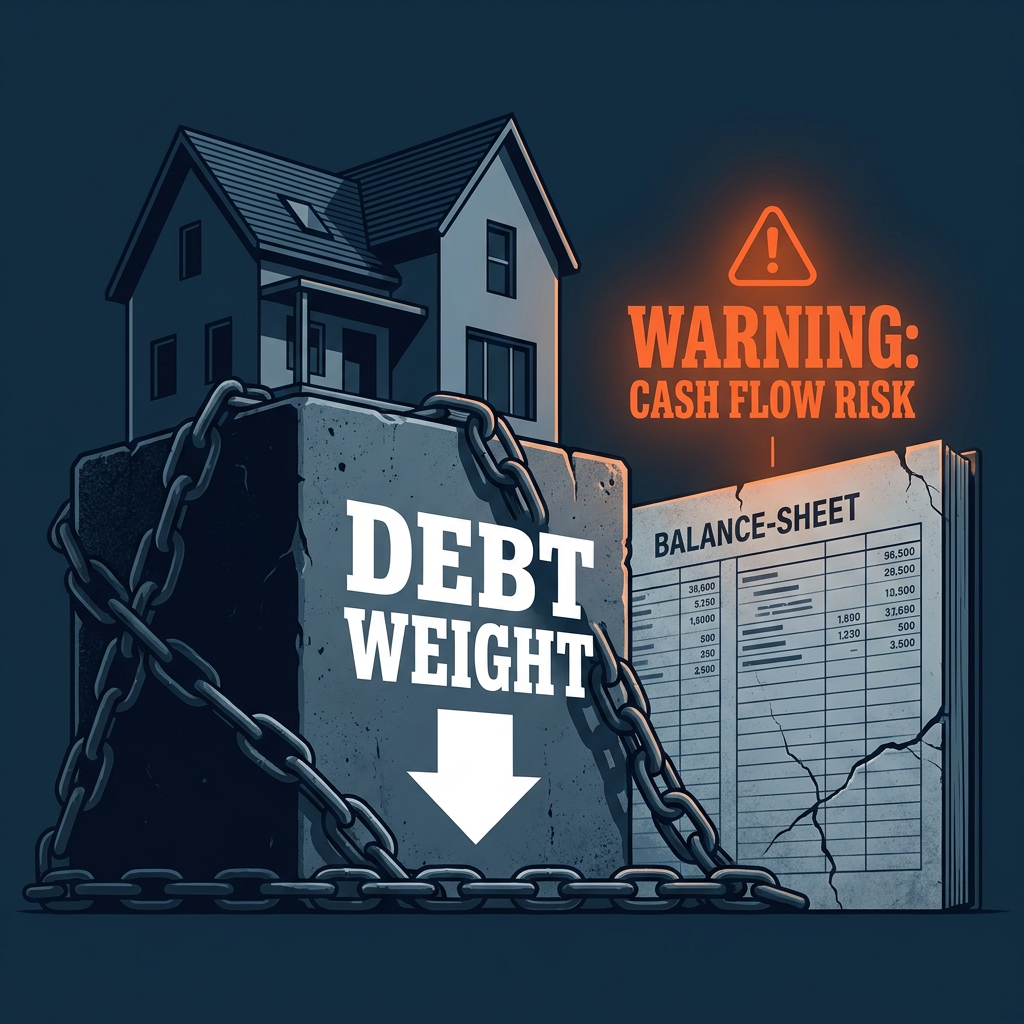
House anchored by debt chains on a cracked balance sheet
Here's what most people call financial security: a W-2 job, some savings, and a plan to buy property when the time is right.
What that is: a single point of failure with a benefits package.
Human labor is the most inconsistent input you can build a financial life on. That's why employers give sick days. That's why we use cars instead of walking. We're not efficient, and we've built systems to compensate for that. AI is the same move applied to thought and communication. Every tool we've ever built exists because human labor, on its own, is fragile.
I learned this at 35, squatting in a bank-owned property with a hole in my lung. Pleurisy. Couldn't walk and talk at the same time without fainting. That's when I found out my labor was a single point of failure. Every bit of education I'd had up to that point taught me how to recognize a job. A J-O-B. Something I couldn't physically do.
What I figured out sitting there: I didn't need a job. I needed a source of income. Those aren't the same thing. The difference between understanding that distinction and not understanding it is the difference between building a business and building a more elaborate trap.
The workman's hunger does work for him. When you're fighting to eat, not to win an award or build a brand, when you're fighting to feed your family and keep the freedom you've got, the clarity about what you're doing and why becomes sharp fast. Comfort removes that pressure. Comfort kills dreams, not because you're lazy, but because when everything's fine, there's no reason to find a better way.
Arbitrage is the first move away from betting everything on your own labor. You're building a system that produces income whether you're paying attention or not. The law of large numbers starts working for you instead of against you. Once you've built that, once the portfolio runs on systems instead of on your daily attention, you're in a different position to make the ownership decision.
Key point: Arbitrage decouples income from your personal labor before you take on mortgage risk. Build the system that produces cash flow without your daily attention, then transition to ownership.
Build the Customer Before the Product
When I started in real estate, I had no money and no credit. Didn't have the traditional things people assume you need. Had to figure out a different path.
What I learned: instead of finding buyers for properties, go find properties for buyers. Build the list first. Interview people on what they'd purchase. Then go find that thing and bring it to them. That's marketing. Same move every successful business makes. Know your customer before you build the product.
Most operators enter STR the other way. Find a property they like, sign the lease or close on the mortgage, then figure out who's going to stay in it. That's hoping and guessing. Hoping and guessing is expensive, not in dollars alone, but in certainty. You can't put a price tag on certainty.
Arbitrage forces you to build the customer relationship first. You're testing the market, learning the guest profile, figuring out what drives bookings in your specific location before you've committed to long-term ownership of the asset underneath it. By the time you buy, you already know what it produces. You're not guessing. You're confirming.
Key point: Arbitrage forces market validation before capital commitment. You learn guest profiles, pricing dynamics, and booking drivers before you take on ownership risk.
When to Transition to Ownership
I'm not saying don't purchase. I'm not saying never own. I'm saying purchase under a specific condition: later, after the cash flow is built.
The goal is to build the arbitrage portfolio to the point where it pays for whatever property you'd like to purchase. Not save up for the down payment. Build the thing that makes the purchase on your behalf.
Here's why that matters: once your arbitrage portfolio is large enough to buy a property, it can buy another one without you recontributing the same sweat equity all over again. Managing a portfolio is a different job than building one. When you've made that transition, when you're managing assets instead of trading labor for them, that's when ownership makes sense.
The signal isn't a number in your bank account. It's the systems running without you. Guest communications handled. Cleaning operations independent. Pricing adjustments happening on schedule. Review management systematized. When those four things run without your daily attention, you've built something that can survive ownership. Before that, ownership is a more expensive version of the same problem you haven't solved yet.
The $2.8M property in Saratoga Springs will still be there. There will be another one like it next year and the year after. The market doesn't run out of opportunities for operators who show up prepared.
What it doesn't have is patience for operators who show up underprepared with a mortgage on the line.
Key point: Transition to ownership when your systems run without you, not when you hit a savings target. The arbitrage portfolio should fund the purchase, proving you're managing assets instead of trading labor.
Run the Numbers Before You Decide
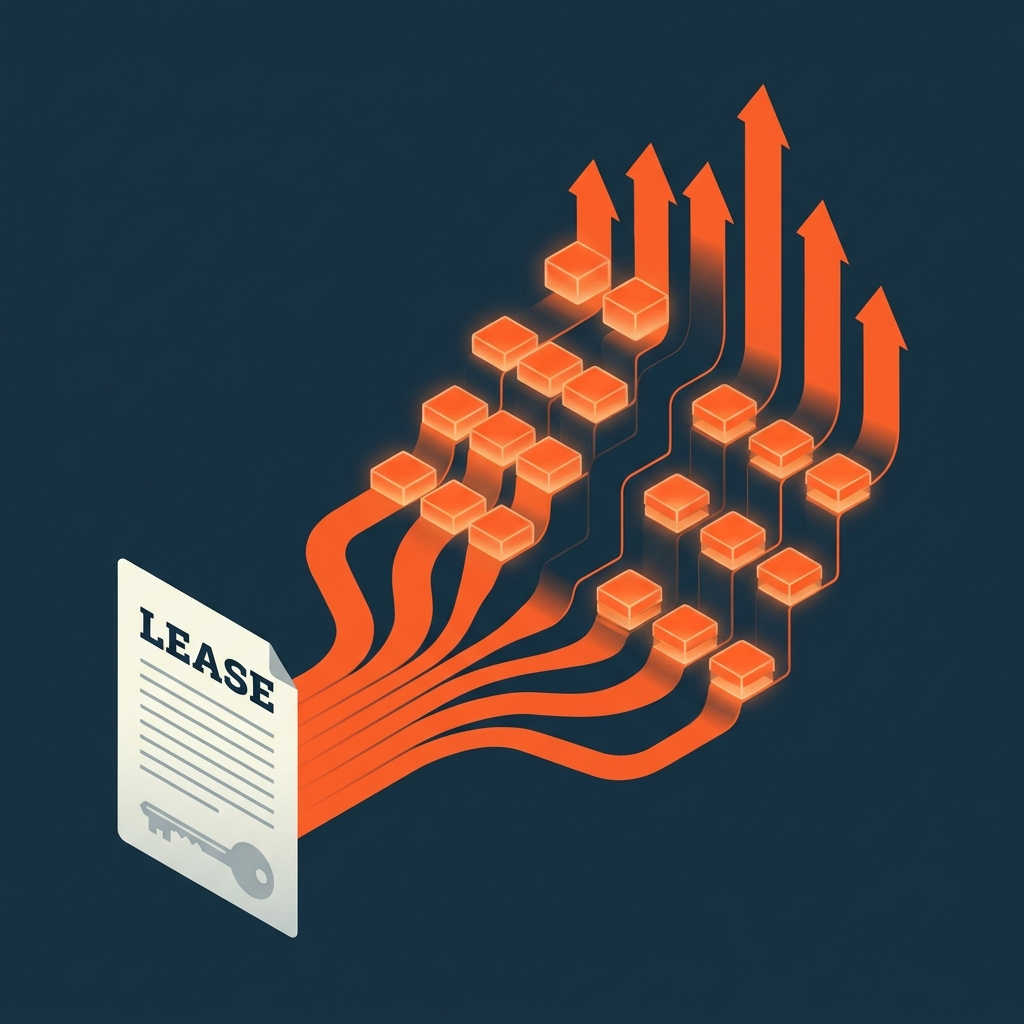
A single lease fanning out into many nightly-booking revenue streams
If all of your cash flow is tied to your labor, if that's the only place income comes from, or you don't have enough cash flow from assets to cover your monthly expenses, then arbitrage is the best place to start. That's not philosophy. That's the math telling you where you are and what the next move is.
Run the numbers. How long would it take you to get back to your current financial position after a purchase? What are the random large-ticket expenses you're absorbing when you own versus outsourcing to a landlord when you lease? What does the arbitrage margin look like across 12 months in the market you're targeting? What does month two look like versus month 18 in the ownership scenario?
Operators who skip this step, who buy on instinct, on a good feeling about a market, on a renovation story that makes a property look better than it pencils, those are the operators who spend their first year of ownership learning what the math would've told them before they signed.
Build the arbitrage portfolio first. Let it fund the purchase. Then let the ownership portfolio fund the next one. At some point, you're not contributing sweat equity to build the portfolio anymore. You're managing what the portfolio produces.
That's the sequence. Everything else is a more expensive way to learn it.
Run the actual numbers. How long would it take you to get back to your current financial position after a purchase? What are the random large-ticket expenses you're absorbing when you own versus outsourcing to a landlord when you lease? What does the arbitrage margin look like across 12 months in the market you're targeting? What does month two look like versus month 18 in the ownership scenario?
The operators who skip this step — who buy on instinct, on a good feeling about a market, on a renovation story that makes a property look better than it pencils — those are the operators who spend their first year of ownership learning what the math would have told them before they signed.
Build the arbitrage portfolio first. Let it fund the purchase. Then let the ownership portfolio fund the next one. At some point, you're not contributing sweat equity to build the portfolio anymore. You're managing what the portfolio produces.
Ready to Build Your Arbitrage Portfolio?
If you're ready to learn STR operations the right way — with cash flow instead of debt — CashFlowDiary's STR AI Mastermind Action Plan walks you through the exact sequence: market validation, first arbitrage contract, systems build-out, and the transition timeline to ownership.
The $2,497 Action Plan includes a 90-minute strategy call with my team to map your specific market, identify your first arbitrage target, and build the operating plan you'll execute over the next 12 months.
Rental arbitrage is when you lease a property long-term and rent it out short-term. You're buying 365 days wholesale via the lease and reselling them retail to guests. The margin between your lease cost and your STR revenue is your profit.
How long does it take to profit from arbitrage vs. ownership?
Arbitrage produces first profit in month two on average. New construction ownership takes 18+ months before first revenue. Existing property purchases take 3-6 months depending on condition and market.
What's the capital requirement for STR arbitrage?
First property arbitrage typically requires $3,000-$8,000 for security deposit, first month's rent, furnishings, and initial setup. Ownership requires 20-25% down payment plus closing costs, typically $50,000-$150,000 minimum.
When should I transition from arbitrage to ownership?
Transition when four systems run without your daily attention: guest communications, cleaning operations, pricing adjustments, and review management. The signal is systems independence, not a bank account number.
What expenses does arbitrage outsource that ownership doesn't?
In arbitrage, the landlord covers HVAC replacement, roof repairs, major appliance failures, structural issues, and property tax increases. In ownership, you absorb all of those.
How do I know if I'm ready for STR ownership?
Run this test: take a two-week vacation without checking your operation. If it breaks, you're not ready. If it runs without you, your systems are ready to survive the added complexity of ownership.
What's the biggest mistake operators make buying STR property?
Buying before they've learned pricing dynamics, guest profiles, cleaning operations, and review management. They pay for 12 months of education with mortgage payments instead of learning those lessons cheaper through arbitrage first.
Can arbitrage cash flow fund property purchases?
Yes. Build the arbitrage portfolio large enough that its monthly profit covers the mortgage payment on the property you want to buy. The portfolio funds the purchase instead of your W-2 savings, and your labor stays decoupled from the transaction.
Key Takeaways
Arbitrage teaches STR operations with profit instead of debt. First revenue hits month two vs. 18+ months for ownership.
You're selling the experience at the property, not the property itself. Learn to build profitable guest experiences before taking on mortgage risk.
Ownership makes you pay for operational lessons with debt and absorb all large-ticket repair expenses. Arbitrage outsources repair risk to the landlord.
Transition to ownership when systems run without you: guest comms, cleaning ops, pricing, and reviews all independent of your daily attention.
Your arbitrage portfolio should fund the purchase, not your W-2 savings. Build the thing that makes the purchase on your behalf.
The diagnostic for readiness: if your operation breaks during a two-week vacation, you're not ready to own.
Run the math on time to break-even, large-ticket expense absorption, and arbitrage margins before you decide. The numbers will tell you what to do.
Earnings & Income Disclaimer: West Egg Enterprises, Inc. / CashFlowDiary does not guarantee any specific income, profit, or financial results from information on this site. Individual results vary based on effort, experience, market conditions, and other factors outside our control. Past performance does not guarantee future results. Nothing on this site constitutes financial, legal, or tax advice.