Your outcomes aren't your circumstances, they're your decisions. Why the inherited sequence breaks, and the mindset-skillset-toolset formula that builds assets instead.
Disclosure: This post may contain affiliate links. If you purchase through our links, we may earn a commission at no extra cost to you. We only recommend tools and services J. Massey's team actually uses.
Learn more →
TL;DR: Your financial outcomes stem from your beliefs, not your circumstances. The sequence you inherited (school, job, house, retire) breaks because your belief sequence breaks first. Building assets requires three components: mindset, skillset, and toolset. Most quit while learning the skillset because they won't sustain the mindset. Fix the belief, cut away the alternatives, and the outcomes change.
Decision means cutting away alternatives, not choosing while keeping options open
The gap between desire and reality is fuel if you move forward, poison if you step back
You can't behave in ways inconsistent with who you believe yourself to be
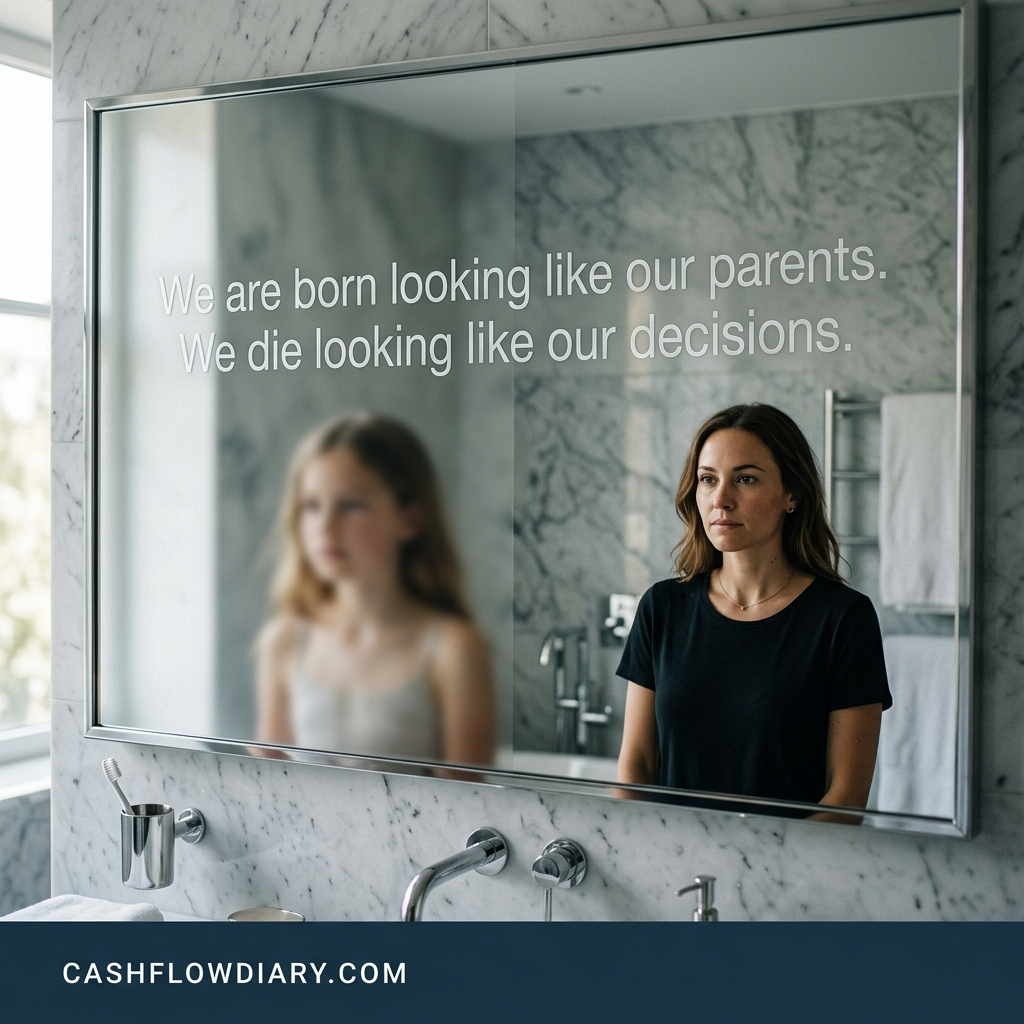
You're born looking like your parents.
You die looking like your decisions.
Your outcomes are yours. Not your parents'. Not the economy's. Not what you inherited. Yours.
The money sequence breaks after the belief sequence breaks. Two operators look at the same opportunity, same math, same market, same starting capital. One sees a path. The other sees a trap.
The variable isn't the opportunity. It's the frame.
I've spent 15+ years in this space, trained more than 10,000 operators through CashFlowDiary, and recorded 237+ podcast episodes breaking down the deals that work and the ones that don't. The pattern below shows up in every cycle.
How Frames Create Beliefs
Frame to belief to behavior to outcome: the causal chain that determines results
Here's what happens when you process anything.
Someone walks down the street. Fast. That's what you see. That's all the data you have.
You don't stop there. You add a frame.
"Late for work." "Rushing home to the kids." "Out for a run." I don't know what story you'll attach. You'll attach one.
The frame is yours. Not theirs.
This happens with everything. Every observation gets a frame. Every opportunity. Every challenge. You see it, frame it, hold the frame long enough, and it hardens into belief.
Belief shapes response. When you believe an outcome favors you, you move. When you don't, you stall. The operator who believes the 365-video formula works starts shooting. The operator who believes it won't starts listing objections.
Same formula. Different frame. Different belief. Different behavior. Different outcome.
You can't behave in ways that contradict who you believe yourself to be.
That's the lock. Your belief about what's possible determines what you'll try. What you try determines what you get.
Key Point: The frame you assign to an opportunity becomes the belief that drives your behavior. Same opportunity, different frame, different outcome. Fix the frame before you fix the finances.
How Assets Get Built: Mindset, Skillset, Toolset
There's a formula for building assets. Simple on paper. Hard in practice.
Toolset is easy. Capital buys it. Camera? Buy one. Software? Subscribe. Property? Lease it. Toolset is a transaction.
Mindset shifts when the frame breaks. You read the right book, see someone do what you thought was impossible, attend the seminar that reframes the problem. The old frame cracks. A new one replaces it.
Skillset is where it gets hard. You have to sustain the mindset while you're building the skillset. Most operators quit right here.
You're in the learning phase. You don't know what you're doing. The results aren't showing. Feedback is slow. The frame cracks. The belief wavers. You talk yourself out of the thing you said you wanted.
You give up on the desire, not the goal.
"Insurance against failure is also insurance against success."
— J. Massey · CashFlowDiary
Operators shrink the gap by lowering what they want instead of closing it by moving forward. "Didn't want it anyway." "Not realistic for someone like me." "Maybe next year."
The gap between desire and reality is pain. That pain is fuel if you move forward. It's poison if you step back.
Comfort wins more often than aspiration. Not trying is easier than learning. You stay where you are and tell yourself a story about why it's fine.
It's not fine. It's comfortable.
Key Point: Toolset costs money. Mindset changes when frames break. Skillset is where operators quit because sustaining the mindset during the learning phase is the hardest part of the formula. The gap between desire and reality is fuel only if you move toward it.
What Decision Actually Means
The word decision comes from Latin: decidere. To cut away.
Incision cuts in. Decision cuts away.
A real decision isn't choosing something. It's cutting off everything else.
Choosing
Deciding
Keeps every option open
Cuts the alternatives away
Holds backup plans as insurance
Removes the backup plans
Insurance against failure
Commitment to the outcome
Nothing has to happen
Nothing moves until you cut
Operators won't make that cut because they're too comfortable with options. They want the result. They also want the safety of being able to bail if it doesn't work.
Nothing happens until you decide.
A real decision cuts away everything else. You're not trying the 365-video formula while keeping job applications open. You're not building rental arbitrage while telling yourself you'll go back to corporate when it gets hard.
You cut. You commit. You remove the other options. The only path forward is through the thing you said you wanted.
That's the difference between the operator who makes it and the operator who doesn't. Same opportunity. Same resources. Different decision.
One cut away the alternatives. The other kept them as insurance. Insurance against failure is also insurance against success.
Key Point: Decision means cutting away alternatives, not choosing while keeping options. Keeping insurance against failure also keeps insurance against success. Nothing moves until you cut.
Why the Inherited Sequence Fails
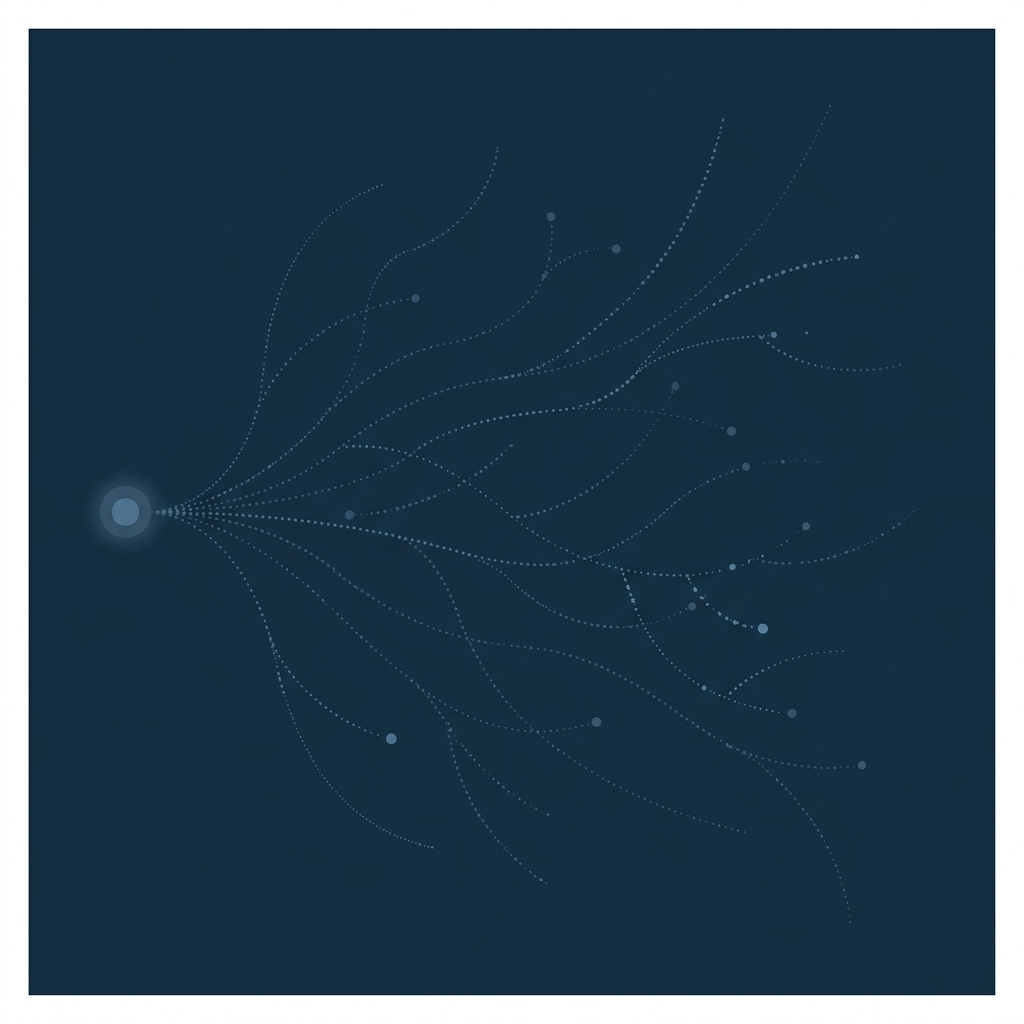
Choosing: keeping every option open, every path uncommitted
The script you got: school, job, 401(k), house, retire. That sequence destroys liquidity. Ties income to labor at a one-to-one ratio. Leaves you paying for the past instead of investing in the future.
Here's what nobody said: the sequence is a belief before it's a behavior.
You believe you need more money, so you work more hours. You believe you need a house, so you destroy liquidity to buy one. You believe retirement means a 401(k), so you lock up capital for decades.
Belief drives behavior. Behavior produces outcome. The outcome you're sitting in right now is the result of the beliefs you've been running, not the effort you've been putting in.
Your outcomes are yours.
Not your parents'. Not your boss's. Not the economy's. Yours. If you don't like them, there's one person who changes them. Look in the mirror. Wave. That's the person.
Key Point: The traditional sequence (school, job, house, retire) is a belief system before it's a behavior pattern. The outcome you're in is the result of beliefs you've been operating from, not effort you've been putting in. Change the belief, change the sequence.
How to Make the Cut: Your Next Two Moves
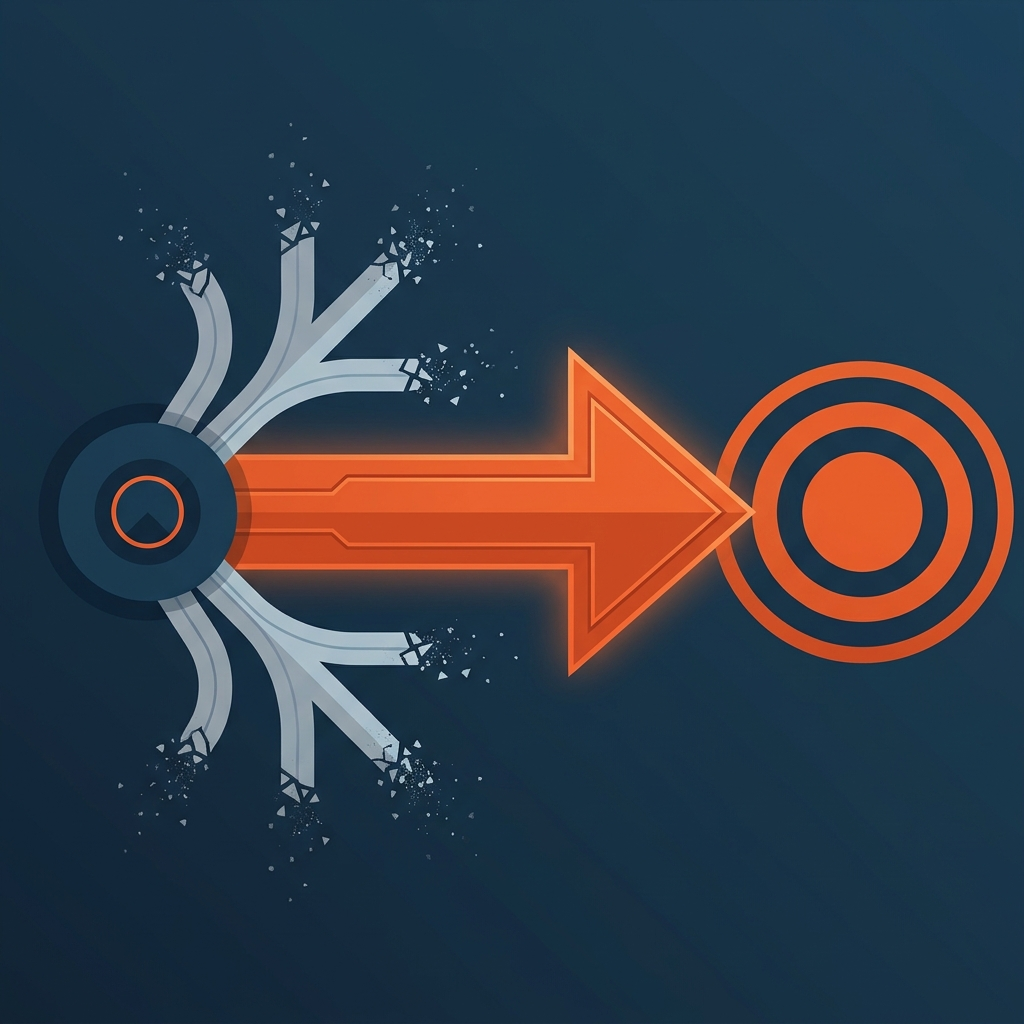
Deciding: cutting away the alternatives to commit to one path forward
Two moves from here.
dedicated time for self-improvement. Two books a month, minimum. Start with The Science of Getting Rich. Public domain. Free. Read it on repeat. Different frames. Different beliefs. Different behaviors.
decide what you want. Not what you need. Not what you have to do. What you want. The world doesn't care about needs. People care about value exchange. Create value they want, they'll care about what you want.
Give more in use value than you take in cash value. That's the exchange. That's how assets get built.
The 365-video formula still works. One video per day. Make it earn $1 per day. Run it for a year. $365 per day. Over $130,000 annualized. Income from the asset, not your labor.
Toolset: phone. Skillset: making a video that earns. Mindset: believing the outcome favors you while you learn.
Operators quit around day twelve. Not because the formula doesn't work. Because they don't sustain the mindset while building the skillset.
Frame cracks. Belief wavers. Comfort calls. They cut away the goal instead of cutting away the alternatives.
You die looking like your decisions.
Make the cut. Build the asset. Fix the sequence.
The outcomes that follow are yours.
Common Questions
How do I know if I'm operating from the wrong belief sequence?
Look at your outcomes. If you're working harder but not getting ahead, if you're earning more but have less liquidity, if you're following the traditional path (school, job, house, retire) but feeling trapped, your belief sequence is driving the wrong behaviors. The outcome is the receipt.
What's the difference between choosing and deciding?
Choosing keeps options open. Deciding cuts them away. When you choose to try something, you keep backup plans. When you decide, you remove the alternatives. The Latin root decidere means to cut away. Real decisions eliminate other paths.
Why do operators quit at day twelve of the 365-video formula?
The skillset hasn't developed yet. Results aren't showing. Feedback is slow. The frame cracks, the belief wavers, and comfort wins. They quit because they don't sustain the mindset during the hardest part: learning the skillset while the toolset is already in hand.
How does the frame I assign to an opportunity change my outcome?
The frame determines the belief. The belief drives the behavior. Two operators see the same opportunity. One frames it as a path, the other as a trap. Same math, same market. Different frame, different action, different result. Fix the frame first.
What if I don't have capital for the toolset?
The toolset for most asset-building models is cheaper than you think. The 365-video formula requires a phone. Rental arbitrage requires first month, last month, and security deposit. The bottleneck isn't capital. It's sustaining the mindset while you build the skillset.
Can I change the sequence I inherited?
Yes. The sequence is a belief before it's a behavior. You change the belief, you change the behavior. The traditional sequence (school, job, house, retire) destroys liquidity because the belief underneath says you need those things in that order. Change the belief about what you need and when. The sequence changes.
How do I sustain the mindset while learning the skillset?
Two books a month, minimum. Start with The Science of Getting Rich. Read on repeat. Surround yourself with operators running the same play. Remove inputs that reinforce the old frame. The mindset cracks when you're isolated and the old frame is the only one available.
What does "give more in use value than you take in cash value" mean in practice?
Create something worth $100 to the person receiving it. Charge $30. The gap is how you build trust, reputation, and recurring business. The exchange isn't transactional. It's relational. Build the asset by making the other person's outcome better than the price they paid.
Key Takeaways
Your financial outcomes are determined by your belief sequence, not your circumstances or effort. Fix the belief, fix the outcome.
Frames become beliefs. Beliefs drive behavior. Behavior produces results. The frame you assign to an opportunity determines whether you see a path or a trap.
Building assets requires three components: mindset, skillset, toolset. Toolset is transactional. Mindset shifts when frames break. Skillset is where operators quit because sustaining the mindset during the learning phase is hardest.
Decision means cutting away alternatives, not choosing while keeping options open. Insurance against failure is also insurance against success.
The traditional sequence (school, job, house, retire) is a belief system that destroys liquidity. It's a belief before it's a behavior. Change the belief, change the sequence.
The 365-video formula works: one video per day, earning $1 per day, compounded over a year produces $365/day or $130,000+ annualized. Operators quit around day twelve because they don't sustain the mindset while building the skillset.
Give more in use value than you take in cash value. That's how assets get built. The exchange is relational, not transactional.
Make the Cut
The mindset is the hard part, and you don't have to sustain it alone. Every operator I work with starts by getting clear on what they actually want, then cutting away everything else. If you want the framework, the decision, the skillset, and the system that turns it into income, that's what we map on a strategy call.
Earnings & Income Disclaimer: West Egg Enterprises, Inc. / CashFlowDiary does not guarantee any specific income, profit, or financial results from information on this site. Individual results vary based on effort, experience, market conditions, and other factors outside our control. Past performance does not guarantee future results. Nothing on this site constitutes financial, legal, or tax advice.